
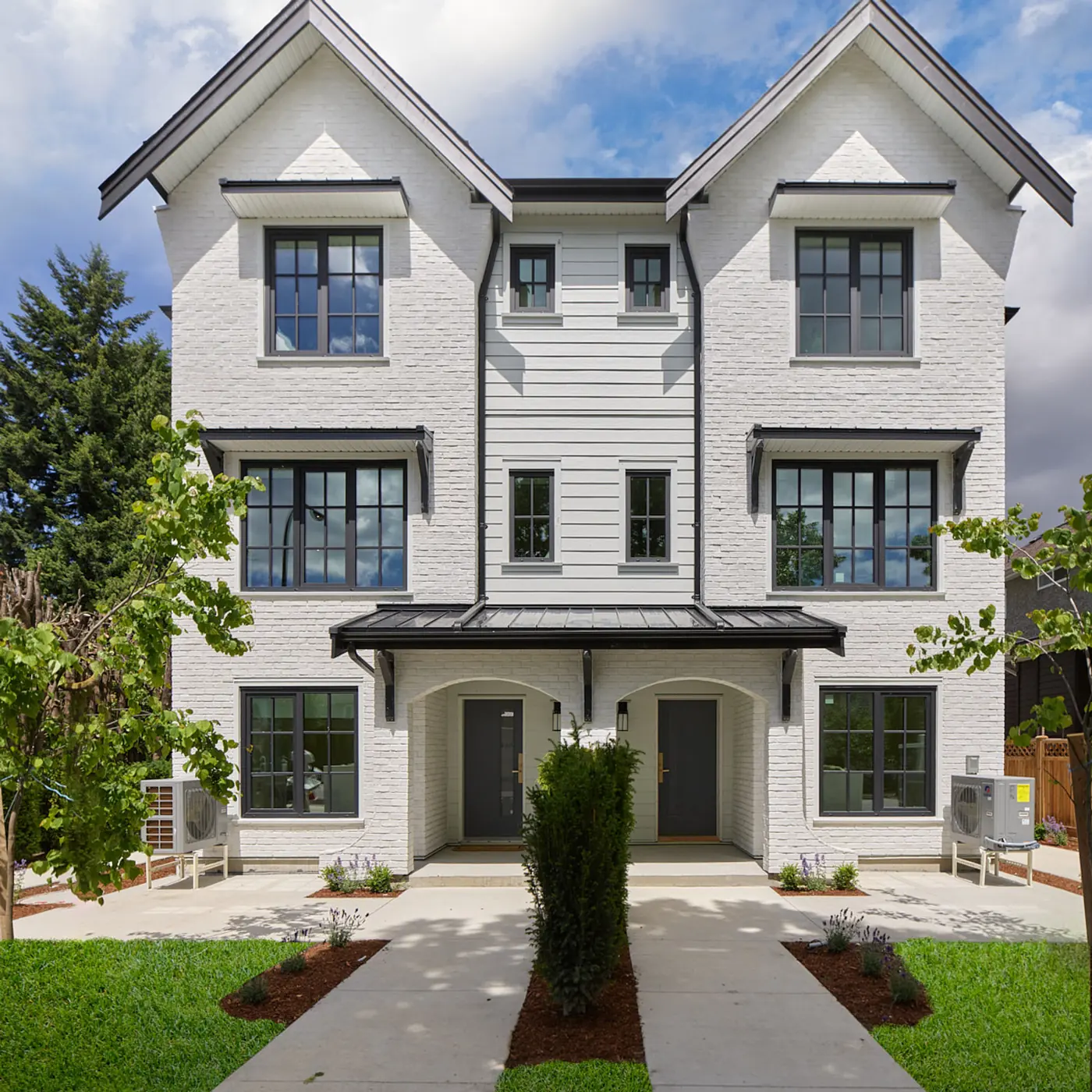
A homeowner whose lot qualifies for a multiplex under Vancouver's R1-1 zoning still has a choice to make: build the fewest units the lot allows, or the most. A duplex, a triplex and a fourplex each sit at a different point on that scale, and each one trades cost, income risk and resale liquidity differently. This guide compares the three directly, using the zoning rules and cost figures covered in Costar's companion guides. For the rules, permit steps and ownership questions behind this choice, read the multiplex guide.
The Three Formats Side by Side
| Duplex | Triplex | Fourplex | |
|---|---|---|---|
| Units on the lot | 2 | 3 | 4 |
| Minimum frontage | Varies by lot type | 10 m (33 ft) | 10 m (33 ft) |
| Income loss from one vacancy | 50% | 33% | 25% |
| Cost per unit vs a single house | Lower | Lower still | Lower still |
| Total project cost | Lowest of the three | Mid | Highest of the three |
| Resale buyer pool per unit | Largest | Smaller | Smaller |
Rental Income Risk
The clearest practical difference between these three formats is what happens to a landlord's income when one tenant moves out. A duplex has only two rental incomes to begin with, so losing one tenant removes half the property's rental revenue until it is re-leased. A fourplex spreads the same risk across four units, so a single vacancy removes a quarter of the income rather than half.
A triplex sits in between, losing a third of its income to a single vacancy. This math is a genuine reason investors lean toward a fourplex over a duplex when the lot supports it: each extra unit lowers the share of income that one vacancy removes.
Zoning Eligibility by Lot
Vancouver's R1-1 zoning ties the maximum unit count directly to a lot's frontage, covered in detail in Costar's zoning and permits guide. A 10-metre frontage supports 3 to 4 units, which covers a triplex or a basic fourplex, while a wider 13.4-metre frontage opens up 4 to 5 units. A narrower or irregular lot may not reach fourplex eligibility even where the total lot area looks sufficient, because the City's rules set the unit count by frontage first.
A specific lot's frontage may cap it at three units regardless of what the owner would prefer to build, which is why a feasibility review of the actual property comes before choosing a target unit count.
Duplex Plus a Laneway House, or a 3-Unit Multiplex?
Owners often ask whether they can build a duplex and add a laneway house behind it. The City's Low Density Housing Options How-to Guide (October 2025 edition, read from the Internet Archive copy saved January 11, 2026, because the City's site refuses automated requests) says a duplex "cannot be built in conjunction with a Laneway House". A laneway house is allowed only with a single detached house, and it cannot be strata-titled, so it cannot be sold on its own.
Two homes at the front and one at the back is a 3-unit multiplex. The guide says the multiplex rules count "the total number of units on the site as opposed to the number of units in each building", and the units may sit in one or more buildings. One development permit covers the whole site, and each building gets its own building permit. A 3-unit multiplex needs at least 10.0 metres (32.8 ft) of frontage and 306 square metres (3,293.8 sq ft) of site area. The guide also says a multiplex is new construction only: it cannot be made by adding a new building to a lot that keeps its existing house.
Cost Comparison
A fourplex costs more in total than a duplex on the same lot, since it has more total floor area, more kitchens and bathrooms (the most expensive rooms per square foot to build), and higher city fees charged per unit. The full cost breakdown explains what drives construction cost and which City fees apply.
The cost per individual home moves in the opposite direction: a fourplex's per-unit cost is lower than a duplex's, because both projects share the same land cost, but the fourplex spreads it across twice as many homes. This is the same economic logic behind multiplex housing generally. The trade-off is that a fourplex requires a larger total construction budget and a longer build to reach completion, so the lower per-unit cost comes with a bigger upfront commitment.
Resale Considerations
A duplex unit generally has a larger buyer pool than a triplex or fourplex unit, since more buyers in the Vancouver market are specifically shopping for a half-duplex than for a smaller multiplex unit. This is a genuine trade-off against the income-protection and lower per-unit cost advantages of a larger multiplex: a triplex or fourplex owner accepts a narrower resale market in exchange for those benefits.
Each format answers a different goal. A buyer prioritizing long-term stability and easier resale may prefer a duplex, while an investor prioritizing rental income protection and lower per-unit entry cost may prefer a triplex or fourplex, depending on which unit counts a specific lot's frontage actually supports.
Costar's Experience Across Unit Counts
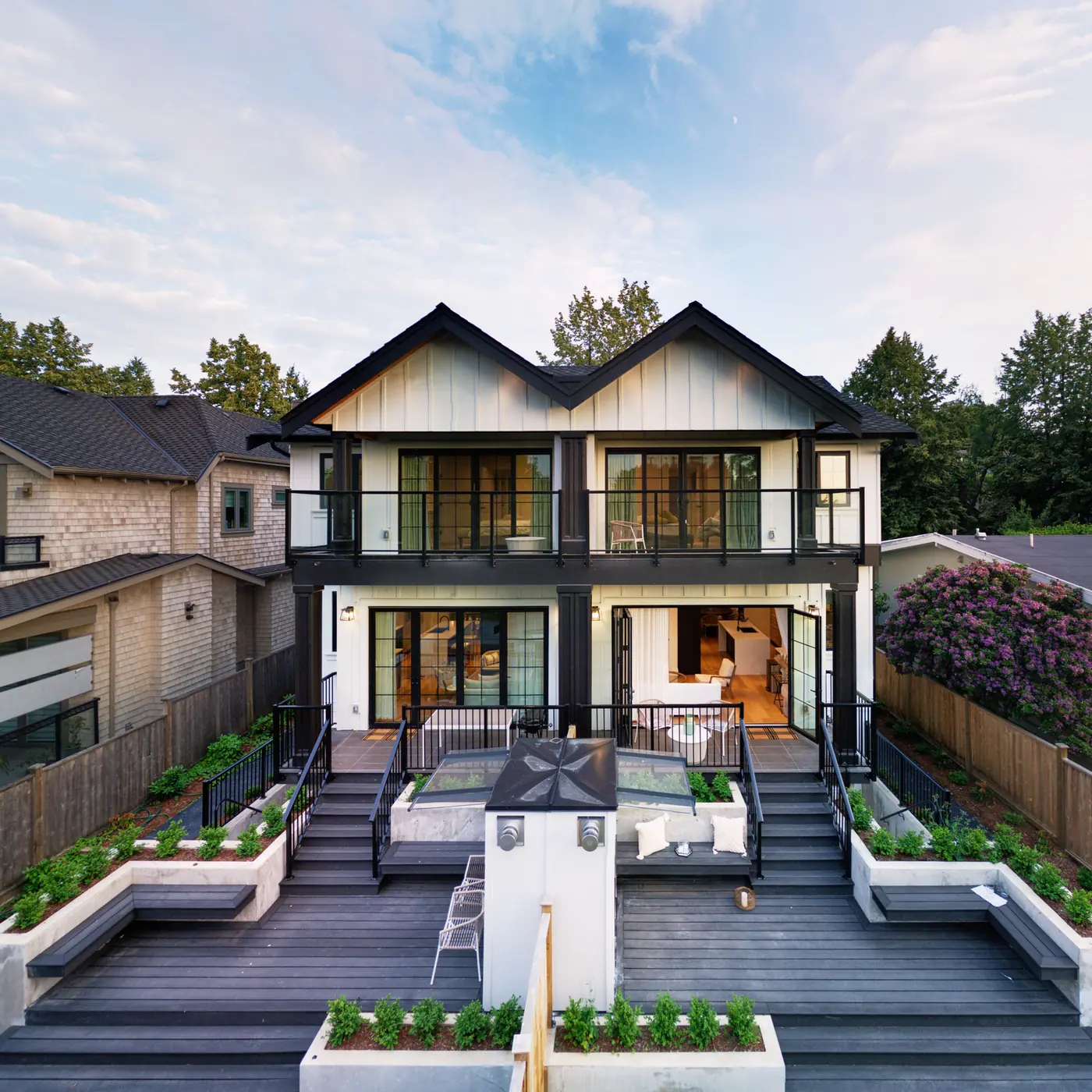
Costar's Vancouver project gallery spans this range directly: a custom newbuilt duplex in Arbutus Quilchena at 2145 West 32nd, a 5-plex multiplex on East 40th Avenue, and a 6-plex multiplex in Killarney. That 6-plex project, "It Takes Two," won Best Multiplex Home at the 2024 Georgie Awards, presented by the Canadian Home Builders' Association of BC.
To find out which unit counts a specific lot supports and how the costs compare for that property, book a consultation with Costar's team.