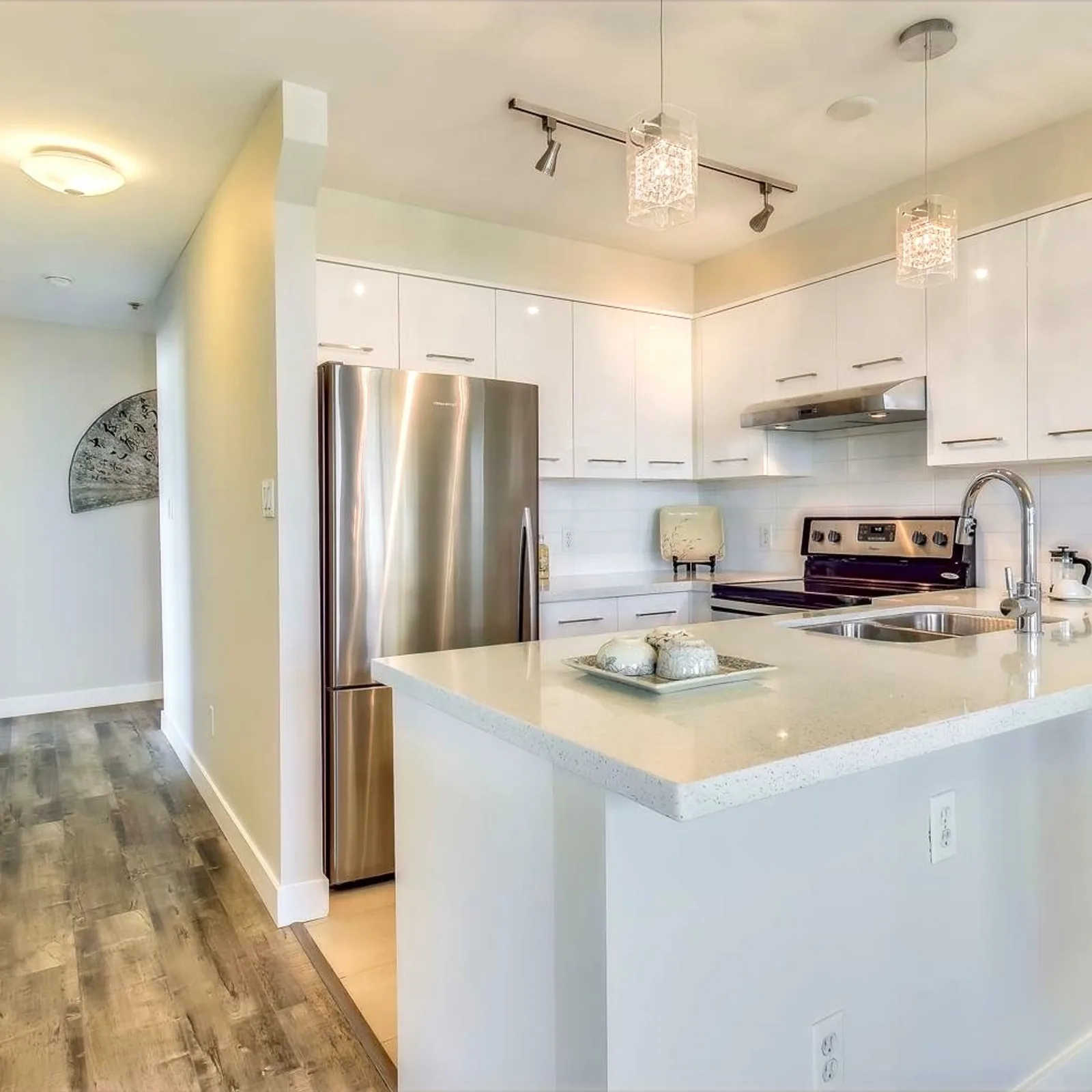
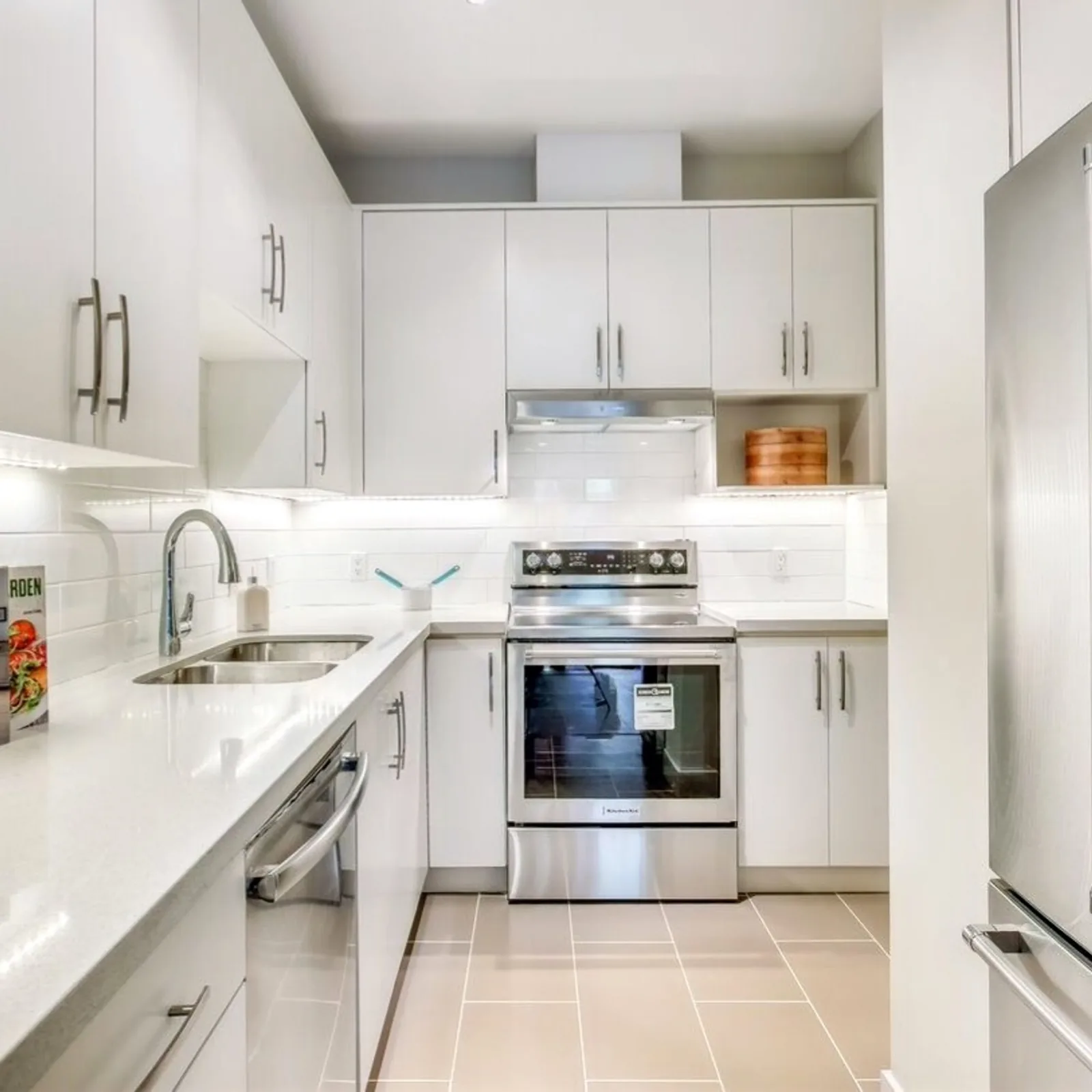
Many families we meet ask for quartz countertops in their Vancouver kitchen. Quartz is hard, it resists stains, and it comes in clean colours that suit a West Coast home. The slab also holds a large share of crystalline silica, and the dust made when it is cut can cause a lung disease that stays for life. In this post, we walk you through what silica dust is, what BC's safety rules ask of the people who cut stone, and how to plan your kitchen so that most of the cutting happens in the shop instead of your home.
Use it to plan your project and to ask the right questions. Each trade still follows its own safety program, and a health question belongs with your doctor. Every rule below comes from WorkSafeBC's own pages and BC's Occupational Health and Safety Regulation, which we read on November 4, 2026.
Silica is the basic part of sand and rock. WorkSafeBC's silica page lists it in concrete, cement, mortar, tile, brick, granite, sand and top soil. Cutting, grinding, drilling or polishing these materials releases a fine dust. When a worker breathes it in, the silica settles in the lungs. WorkSafeBC says this can cause silicosis, a lung disease that cannot be reversed, and lung cancer. A person can have silicosis for years before they notice it.
Engineered stone, sold as quartz, is the material with the most silica in a typical kitchen. A January 2026 article by WorkSafeBC physicians in the BC Medical Journal gives these figures:
- Engineered stone: more than 90 percent crystalline silica
- Granite: 45 percent (given as an approximate figure)
- Marble: 5 percent (given as an approximate figure)
The same article says workers who make or install engineered stone countertops may develop accelerated silicosis, which shows up 5 to 10 years after exposure starts. It estimates that 57,000 workers in BC are exposed to silica each year.
The finished countertop in your kitchen is a separate question. The Government of South Australia, which applies Australia's ban, says engineered stone can be used safely once installed, as long as it stays undisturbed and nobody removes, repairs or changes it, because that work could make silica dust. The same page says there is no requirement to remove engineered stone that is already installed.
In BC, the silica rules sit in sections 6.110 to 6.112.7 of the Occupational Health and Safety Regulation. They apply wherever a worker cuts, grinds, drills or polishes stone, concrete or masonry with power tools. That covers the countertop fabricator, the tile setter and the crew that opens up a concrete wall.
The rules follow a set order:
- Risk Assessment First. Section 6.112 says an employer must not let workers start a task that may expose them to silica dust until a qualified person has completed a written risk assessment. The assessment must look at the silica content on the product label or safety data sheet, and at how long and how hard the work will be.
- A Written Plan. Under section 6.112.1, if workers may be exposed, a qualified person writes an exposure control plan and the employer puts it in place. The plan covers dust controls, safe work steps, protective equipment, emergencies and cleanup.
- Remove the Source Where You Can. Section 6.112.2 asks the employer to avoid silica products where practicable, by using materials or processes that remove the risk. Where that is not practicable, the dust must stay below the exposure limit. The order is fixed: engineering controls first (water on the blade, local exhaust, an enclosure), then work practices, and only then respirators, which are added to the other controls.
- Measure the Air. Section 6.112.3 calls for air monitoring on the first shift where there is a risk of harmful exposure, with records kept for at least 10 years. Section 6.112.4 lets an employer skip this when a qualified person finds the controls work and there is earlier monitoring from the same kind of work.
- Clean Up the Right Way. Section 6.112.6 says the area is cleaned at the end of every shift where practicable, with a vacuum that has a HEPA filter on its exhaust or with wet methods. It bans blowers, compressed air, dry sweeping and dry mopping for silica dust. Waste goes into sealable containers.
WorkSafeBC's page, read on November 4, 2026, sets out these controls and names no ban on engineered stone in BC. Australia went further. South Australia's page says the national ban that started on July 1, 2024 prohibits the manufacture, supply, processing and installation of engineered stone benchtops, panels and slabs. If you are ordering a quartz counter, check WorkSafeBC for any change in the rules before you sign.
The countertop is the largest source, but it is one of several. On a typical kitchen job in Vancouver, silica dust can come from:
If your current kitchen has a stone or quartz top, taking it out can break or cut it. Plan this with your contractor as a separate task, with the same dust controls as new stone work. In an older house, the walls and flooring behind the cabinets may also hold asbestos or lead. Our post on the hazardous materials survey before a renovation explains that step.
Sink openings, cooktop openings, holes for the tap and soap dispenser, and the trim at the end of a run all need cutting. Ask for as many of these cuts as possible to be made in the shop.
Ceramic and porcelain tile, grout and thinset all contain silica, according to WorkSafeBC's list. A wet saw set up outside, with the slurry collected, keeps that dust out of the house.
Cutting a concrete floor for a new drain line, or grinding a concrete wall for an island outlet, releases the same dust. Your kitchen order of work, covered in our post on the order of work in a kitchen renovation, shows where these tasks fall.
Some choices you make in the design stage set how much cutting happens in your home.
The BCMJ figures give a clear ranking: engineered stone holds the most silica, granite less, marble the least of the three. Each material also wears in its own way, so talk through daily use with your designer as well. If the silica content matters to you, ask the supplier for the safety data sheet of the exact slab, because section 6.112 of the Regulation already requires the employer to read it. Then compare.
A fabricator that templates your kitchen, cuts every opening in the shop and delivers finished pieces leaves only setting and sealing for the crew in your home. A design with a long run of counter that must be joined on site, or an appliance chosen after the stone was cut, adds work in the kitchen.
The fabricator needs the exact sink and cooktop models before they cut. If you change a model after the template is made, the opening must be cut again, often on site. Choose appliances and fixtures early and keep them fixed.
A family living in the house during a kitchen renovation shares the air with the work. Plan for dust-producing days. Close the kitchen off from the rest of the home with a plastic barrier, set the furnace or ventilation system so it does not draw air from the work area, and keep children, older parents and pets away on the days when stone, tile or concrete is cut.
Ask for the Safety Data Sheet. The supplier of every slab can give you one. It lists the crystalline silica content.
Ask What Gets Cut on Site. Ask the fabricator to list every cut planned for your kitchen and whether it happens in the shop or in your home. The best answer for your family is "none in the home".
Ask How Dust Is Controlled. If any cut must happen on site, ask what control the crew will use. Water on the blade or a saw with a shroud connected to a HEPA vacuum are the controls WorkSafeBC describes. A dry grinder with no shroud is a warning sign.
Choose Fixtures Before the Template. Pick the sink, faucet and cooktop before the template visit, and do not change them.
Watch the Cleanup. At the end of each day, the area should be cleaned with a HEPA vacuum or wet methods. If you see someone sweeping dry or blowing dust with compressed air, ask them to stop. Section 6.112.6 does not allow either.
On our kitchen projects, the plan for stone and tile starts in design, long before anything is cut. Costar's process page describes how a construction manager supervises the crew and subtrades and checks the work against the plans before the next stage starts. For a kitchen, that means we confirm the appliance and sink models before the countertop template, we ask the fabricator to cut the openings in the shop, and we schedule tile cutting where the dust can be controlled outside the living space.
We plan for the family who will cook in the kitchen and for the crew who builds it.
If you are planning a new kitchen and want to talk through materials, layout and the order of work, our team is happy to sit down with you. Tell us about your project today. Book a consultation.
Related on this site: Kitchen renovation in Vancouver · Kitchen renovation permits · Book a one-hour project consultation