
When several families share one lot in Vancouver, they also share a roof, a driveway, a yard fence and a set of rules. In BC that shared life is set by the Strata Property Act. This post walks you through what the Act asks of a small multiplex strata in its first year: who runs it before the owners move in, what happens at the first meeting, how the bylaws work, how the reserve fund is built, when a depreciation report is needed, and why we hire a property manager early. It also covers where owners go when they disagree.
The rules below come from the Strata Property Act and the Strata Property Regulation as BC Laws published them on October 1, 2026. The law gives the general rule. Your own case depends on your strata plan, your contracts and your bylaws, so have a lawyer review them before you sign or sell.
What a Strata Is in a Small Multiplex
A strata splits one property into separate homes that each owner holds, plus shared parts that all the owners hold together. The homes are called strata lots. The shared parts, such as the roof, the outside walls, the walkways and the pipes that serve more than one home, are called common property.
Under section 2 of the Act, the moment the strata plan is filed at the land title office, a strata corporation exists. Its name is "The Owners, Strata Plan" followed by the plan number, and every owner is a member. The strata corporation pays for the shared parts, collects strata fees and enforces the bylaws. A council of owners makes its day-to-day decisions.
Who is the owner developer? Section 1 of the Act gives the answer: the person registered as the owner of the land when the strata plan is filed. If you are a homeowner who builds a multiplex on your own lot and then sells some of the homes, that person may be you, or the partnership you formed for the project. This is the reason a family building a fourplex needs to understand Part 3 of the Act before the first buyer signs.
The Owner Developer's First Year, Stage by Stage
Part 3 of the Act lists what the owner developer must do. Here it is in the order it happens.
-
Before Any Home Is Sold. Section 5 says the owner developer acts as the strata council from the day the strata corporation is created until the owners elect their own council. Section 6 says the owner developer must act honestly and in good faith for the strata corporation, use the care of a reasonable person, and make reasonable efforts to pursue warranty claims on the shared parts of the building. Section 7 says the owner developer pays all strata expenses up to the last day of the month of the first sale.
-
The Interim Budget. Section 13 says the owner developer prepares a 12 month interim budget and gives a copy to each buyer before the buyer signs a purchase agreement. It lists the expected operating costs, the reserve fund contribution and each home's monthly share. If the real costs turn out higher than the budget, section 14 says the owner developer pays the difference within 8 weeks after the first annual general meeting. If the real costs are 10% or more above the budget, section 3.1 of the Regulation adds an extra amount equal to 2 times that difference, or 3 times when the real costs are 20% or more above the budget. A careful budget protects you and your buyers.
-
The First Sale. On the day the first home is sold, section 12 says the owner developer opens the contingency reserve fund with its own money. The fund belongs to the strata corporation, and the owner developer may not use it to pay strata expenses.
-
Contracts Before the First Meeting. Between the first sale and the first annual general meeting, section 10 says the strata corporation may not sign a contract with the owner developer, or with a person closely connected to the owner developer, unless all owners approve it by unanimous vote at a special general meeting.
-
The First Annual General Meeting. Section 16 sets the timing. The meeting must be held within a 6 week period that starts on the earlier of two dates: the day more than half of the homes have been sold, or 9 months after the first sale. The notice must include the first annual budget and a financial statement. If the owner developer does not hold the meeting on time, section 17 lets any owner call it, and section 3.1 of the Regulation charges the owner developer $1,000 for a delay of up to 30 days, plus $1,000 for each further 7 days.
-
The Hand-Over at the Meeting. Section 20 lists what the owner developer must place before the meeting and give to the strata corporation. That includes the building permit plans and any amendments, any document showing that a pipe or wire is not where the plans show it, every contract signed for the strata, the registered strata plan, the warranties, manuals and operating instructions for the shared parts, and the names and addresses of the main contractors. Section 3.2 of the Regulation names the parts of the building that list must cover: the electrical, heating and plumbing systems, the elevators, the exterior walls, the outside windows and doors, the roof and the foundations, plus any building envelope consultant and the project manager. The owners then elect a council for one year and vote on the budget by majority vote.
-
The Weeks After. Section 22 gives the owner developer one week to transfer the strata's money to the new council and hand over the keys and garage door openers. Section 21 gives 8 weeks to deliver an updated financial statement. Section 15 says any insurance policy the owner developer arranged must stay in force for at least 4 weeks after the meeting. Section 23 says the owner developer keeps the strata's early financial records for 2 years and lets the strata corporation inspect them free of charge.
Bylaws: The Rules Every Owner Follows
Bylaws are the rules for using the homes and the shared parts. Section 120 says a strata uses the Standard Bylaws printed at the end of the Act, unless the owner developer filed different bylaws when the strata plan was filed.
The Standard Bylaws already cover a lot of daily life in a multiplex. Each owner repairs and maintains their own home, and the strata corporation repairs the structure, the exterior, the balconies and stairs attached to the outside, the outside doors and windows, and the fences around patios and yards. An owner needs the strata's written approval before changing the structure or the exterior. The pet bylaw allows one dog or one cat, small caged animals, up to 2 caged birds and aquarium fish. The council has 3 to 7 members, and if the strata has fewer than 4 homes, every owner sits on the council. In a triplex, then, all three owners are the council.
For a family building for several generations, the bylaws are worth reading closely before the plan is filed. Think about who lives on which floor, whether grandparents need a parking spot near the door, and how a shared yard will be used. Changing the bylaws later is harder. In a strata where every home is residential, section 127 says no bylaw can be changed before the second annual general meeting unless every owner votes for it. After that, section 128 asks for a 3/4 vote at a general meeting, and the change has no effect until it is filed at the land title office.
Fines have limits too. Section 7.1 of the Regulation caps a fine at $200 for each breach of a bylaw and $50 for each breach of a rule, and a fine for a continuing breach can repeat at most every 7 days. Before any fine, section 135 of the Act says the strata corporation must have received a complaint, given the owner or tenant the details in writing, and offered a chance to answer, with a hearing if they ask for one.
The Contingency Reserve Fund
Section 92 sets up two pots of money. The operating fund pays for costs that come once a year or more often, such as insurance, garbage, gardening and the manager's fee. The contingency reserve fund is the shared savings account for costs that come less often than once a year, such as a new roof, exterior paint or a hot water system.
The Regulation sets the minimum amounts. At the first sale, if it happens within one year of the strata plan being filed, the owner developer deposits 10% of the estimated operating expenses in the interim budget (section 12 of the Act and section 3.01 of the Regulation). The interim budget itself must also put at least 10% of the operating expenses into the fund. For the first full year, and every year after, the yearly contribution must be at least 10% of the amount budgeted for the operating fund (sections 3.4 and 6.1 of the Regulation). From the second year on, the owners must also look at the most recent depreciation report, if they have one, when they set the amount.
Spending from the fund needs a vote. Section 96 allows a majority vote when the spending is to get a depreciation report or to do repairs that the latest depreciation report recommends. Most other spending needs a 3/4 vote. Section 98 lets the strata spend without a vote only when there are reasonable grounds to believe the money is needed right away for safety or to prevent serious loss or damage, such as a burst pipe, and the owners must be told as soon as possible.
In a multiplex of four or five homes, a large repair is split among only four or five owners. Ten percent is the lowest amount the law allows. Your strata can save more than that, so talk it through at the first meeting.
Depreciation Reports: Five Homes or More
A depreciation report is a written study of the shared parts of the building. Under section 6.2 of the Regulation, it is based on a site visit, lists each part with its expected life over 30 years, estimates the cost of repairing and replacing each one, and gives at least 3 ways the owners could pay for that work over 30 years. It must be prepared by a qualified person. For a report obtained on or after July 1, 2025, that means someone registered or designated by one of the bodies the Regulation lists, such as a professional engineer, an architect, an applied science technologist or a certified reserve planner.
The number of homes decides whether you need one. Section 6.22 of the Regulation removes the requirement while a strata has fewer than 5 lots, which covers a duplex, triplex or fourplex strata. A 5-plex or 6-plex strata must get one.
For a new strata, the deadline depends on when it was created. Section 6.21 says a strata created on or after July 1, 2024 but before July 1, 2027 must get its first report no later than 2 years after its first annual general meeting. A strata created on or after July 1, 2027 has 18 months. After the first report, a new one is needed at least once every 5 years. For a strata created on or after July 1, 2027, section 6.23 also requires the owner developer to pay toward that first report into the reserve fund by the first annual general meeting: $5,000 plus $200 for each strata lot, up to a total of $30,000. For a 5-plex, that works out to $6,000.
A separate rule covers electrical planning. Section 5.8 of the Regulation says a new strata with 5 or more lots must get an electrical planning report from a qualified person within 5 years after the strata plan is filed. A new strata with fewer than 5 lots does not need one.
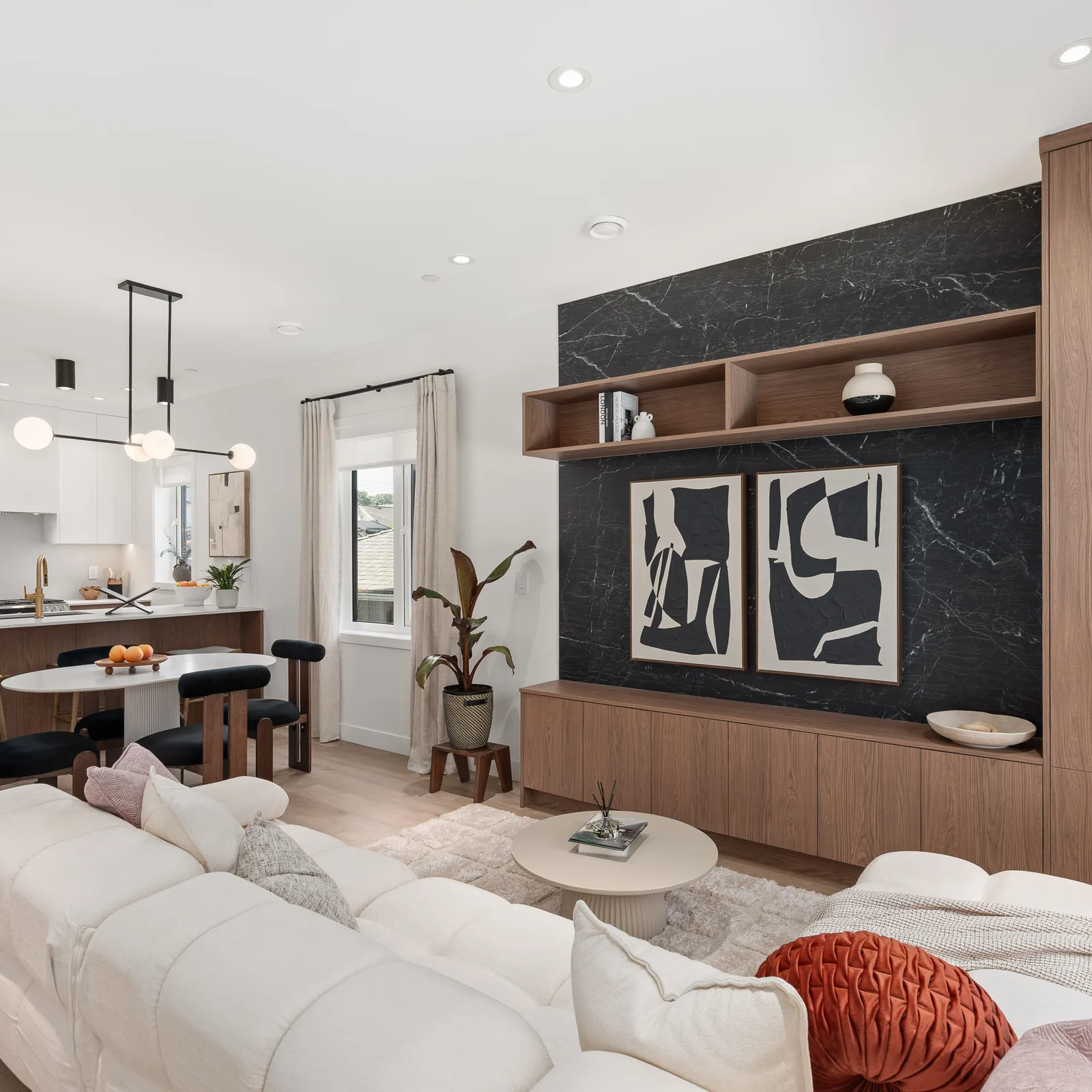
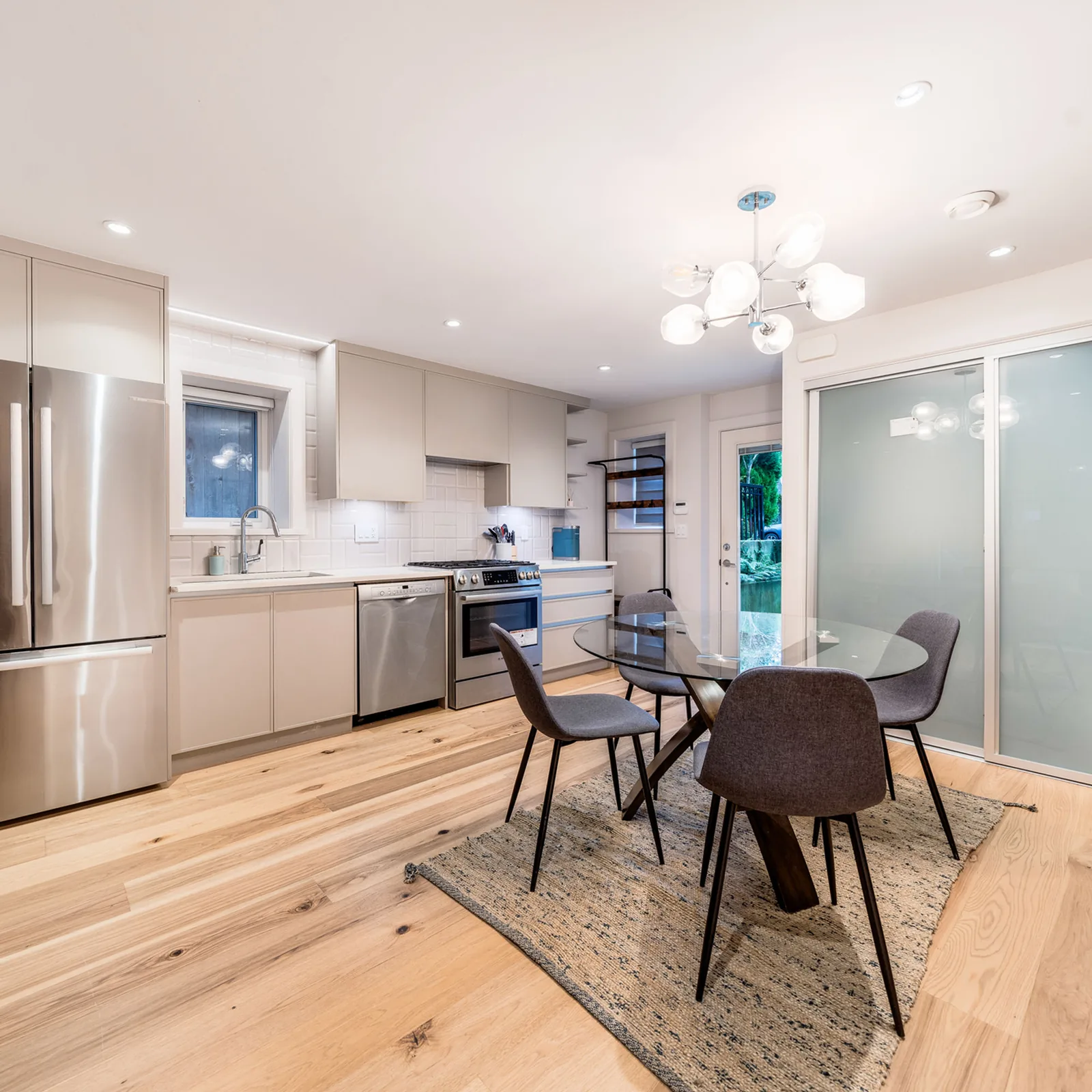
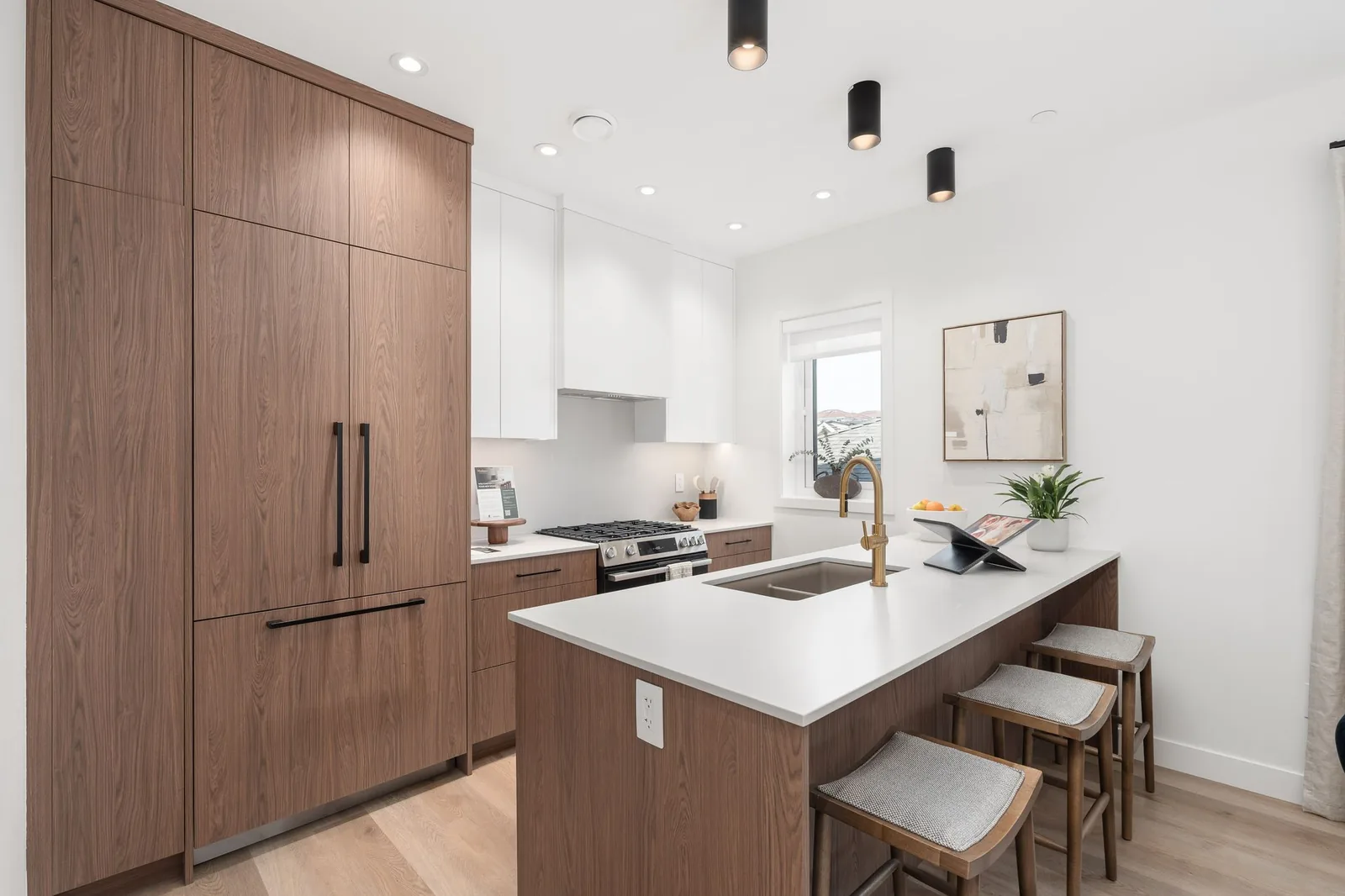
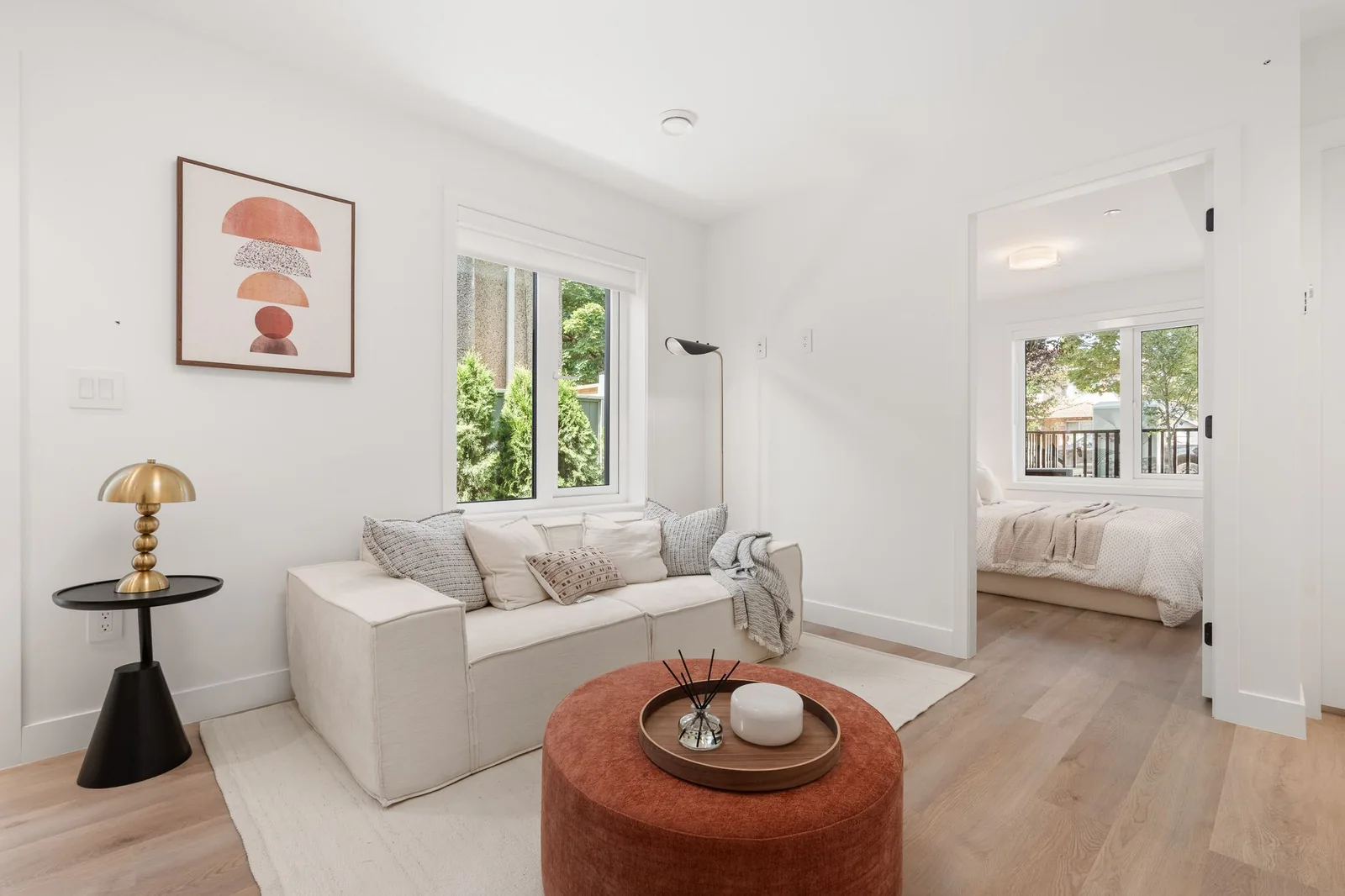
Two of the multiplexes in Costar's project gallery are above that line. Quintet Townhomes at 2240 E 40th Ave is five homes, and We Killarney Townhomes at 2333 E 54th Ave is six. Quintet's project page lists it as a managed strata, from the developer's sales package. A five-home strata like that one falls under the depreciation report rule from its first year.
Hiring a Strata Manager Before the First Owners Move In
A strata manager is a licensed company that runs the paperwork for the strata. BC Financial Services Authority (BCFSA) lists the usual services: managing the strata's papers and money, preparing for meetings, taking minutes, enforcing the bylaws, hiring and supervising trades, and collecting strata fees.
In REW's guide for homeowners building a multiplex, Louis Nguyen, Costar's Director of Sales, described how we do it on our own projects: "In our case, we actually hire and engage with a property management company before the first homeowners move into the property. So the professional property management company will already have been contracted in place." (REW, December 15, 2025). He also told REW that, in his view, a strata that is set up and managed well removes many of the conflicts between owners who live on the same property.
The reason is simple. On move-in day, the new owners already have someone to call about a leaking gutter, someone who sends the meeting notice on time, and someone who keeps the reserve fund in its own account. Section 95 of the Act requires that separate accounting.
The Act also protects owners who did not choose that manager. Section 24 says a strata management contract signed before the first annual general meeting ends no later than 4 weeks after the second annual general meeting, unless the owners vote by majority at that meeting to keep it. Section 39 lets the strata corporation cancel any management contract on 2 months' notice after a 3/4 vote, with no penalty. The owners can always choose someone else.
Check the licence before anyone signs. The Province's licensing page says all strata managers in BC must be licensed by BCFSA, and that a strata management company must be a licensed brokerage with a managing broker. BCFSA's Find a Professional search can be filtered to strata management and shows licence conditions and recent discipline. Owners in a small strata may also manage it themselves, and the Province's page says self-managing owners do not need a licence.
When Owners Disagree
Close neighbours on one lot will not always agree about noise, parking, a repair bill or a vote. The first step under the Act is the council. Section 189.1 says an owner or tenant must ask for a council hearing before going to the Civil Resolution Tribunal, unless the tribunal waives that step.
The Province's page on the tribunal says it works online at any hour and can resolve disputes about unpaid strata fees or fines, unfair actions by the strata corporation, bylaw enforcement such as noise, pets, parking and rentals, who pays for repairs, and how meetings and votes were run. The same page says the tribunal cannot decide disputes dealing with developers, and that some strata disputes must be filed in the BC Supreme Court instead. For a dispute in your own strata, talk to a lawyer about which path fits.
Practical Tips for a New Multiplex Strata
Read the Bylaws Before the Plan Is Filed. Changing them later needs every owner's vote until the second annual general meeting.
Build the Interim Budget From Real Quotes. Get prices for insurance, gardening, snow clearing and management, because the owner developer pays any shortfall.
Put a Date on the First Meeting. Count 9 months from the first sale and mark it, so the 6 week window is not missed.
Keep a Hand-Over Box From Day One. Collect permit plans, warranties, manuals and the list of trades during construction, so the documents in section 20 are ready.
Save Above the Minimum. Ten percent is the lowest amount the law allows, and a small strata has few owners to share a large repair.
Check the Manager's Licence. Search the name on BCFSA's register before the contract is signed.
How We Plan for Strata on a Multiplex
At Costar, a construction manager coordinates the trades, orders materials and checks the finished work against the plans. Our process page describes the project binder we hand over with manuals, warranties and trade contacts, and the inspections at 3, 6 and 12 months after handover. On a multiplex, that same paperwork becomes part of what the strata needs at its first meeting. Design is also the right time to think about the strata: who lives on the ground floor, which parts the strata will maintain, and what will need repair in 20 or 30 years.
Louis also told REW that the first step for a homeowner is to email the city and ask what can be built on the property. Once you know the number of homes, you will also know which strata rules apply to you. Our post on duplex, triplex and fourplex choices in Vancouver can help with that first decision.
We would be glad to walk you through a strata plan for your lot. Tell us about your project today.
Related on this site: Multiplex construction in Vancouver · Quintet Townhomes, a five-unit multiplex in Vancouver · Book a one-hour project consultation