
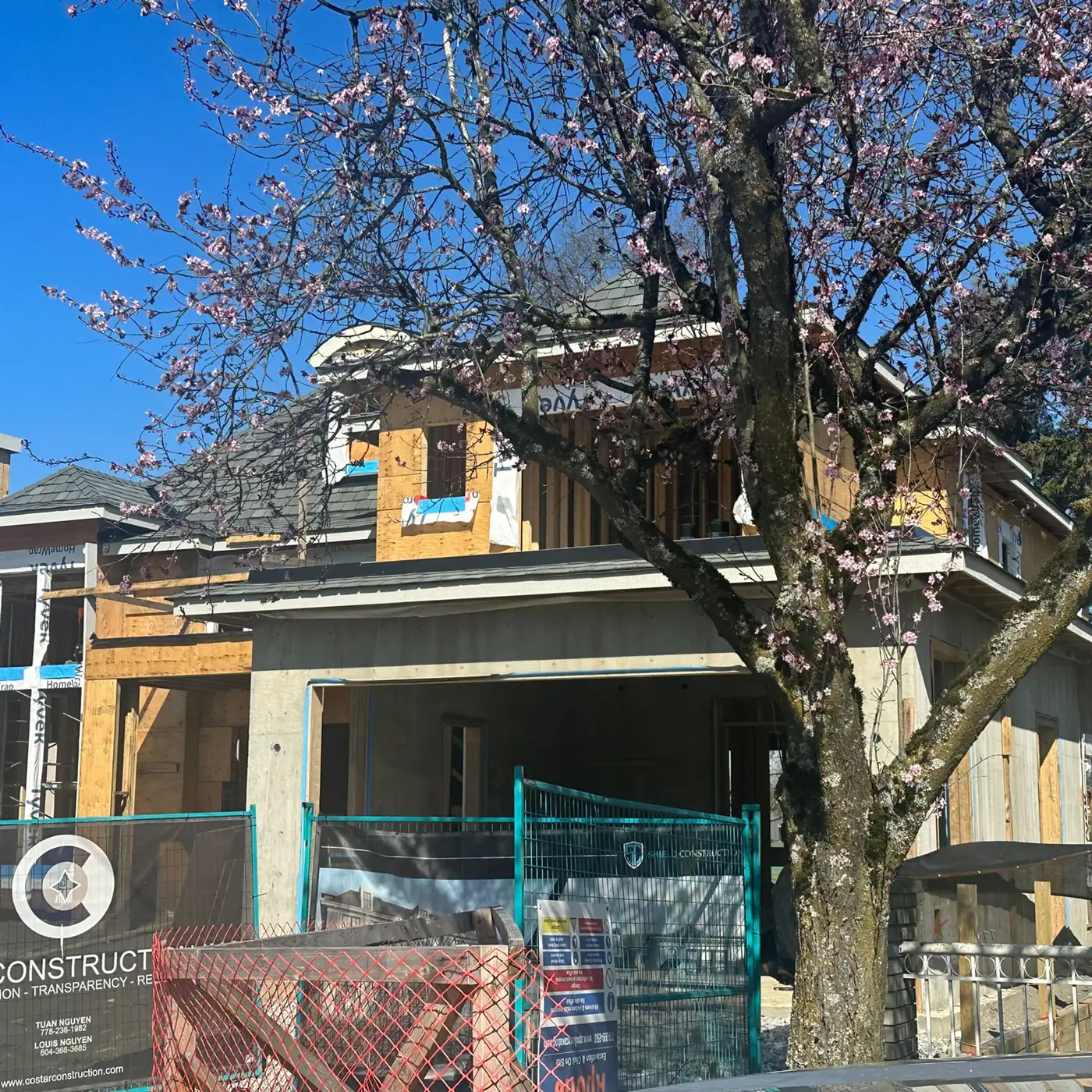
A large tree on your lot can shape where a new house or multiplex sits, where the driveway and service lines run, and when the demolition crew can start. Each city in Metro Vancouver writes its own tree bylaw, and in several of them the rules change once you apply to build. In this post we walk you through what Burnaby, Coquitlam, New Westminster and West Vancouver ask for: when a tree needs a permit, how many replacement trees you plant, how the protection fence goes up and when an arborist's report comes in.
Why Trees Come First on a Building Lot
Most tree bylaws protect trees by trunk size. The trunk is measured 1.4 metres above the ground, a measure called diameter at breast height. Several cities set a lower size limit once a lot is being developed, so a tree you could cut last year may need a permit this year.
The bylaws protect roots as well as trunks. Burnaby's Tree Bylaw counts it as damage to press down the soil under a tree's branches with machines or stored materials, to pile more than 20 centimetres of soil there, or to dig soil out. That area under the branches is the dripline. A new foundation, a driveway or a trench for water and sewer lines can all reach into it.
So the tree plan and the house plan are drawn together. If you find a large tree late, you may redraw the house.
The Tree Process, Stage by Stage
-
Survey the Lot
A surveyor maps each tree with its location, species and trunk size. Coquitlam's Tree Cutting Permit page and West Vancouver's Tree Bylaw both work from these measurements.
-
Get an Arborist's Assessment
An arborist checks each tree's health and whether it can stay. Burnaby's bylaw lets the City ask for a report by an arborist certified by the International Society of Arboriculture. Coquitlam asks for one in named cases, such as trees near a creek or on a steep slope.
-
Plan the Footprint Around the Trees
Your designer places the building, driveway and service lines with the trees in mind. Each tree to keep, each tree to remove and each replacement tree goes on the site plan.
-
Apply for the Tree Permit
In Burnaby this happens with your building application. In New Westminster it happens with your Development Permit.
-
Put Up the Protection Fence
The fence goes up before demolition or digging, and a city arborist may inspect it first.
-
Plant the Replacement Trees
Burnaby's New Home Construction page says final inspection comes after the retained and replacement trees are planted. Only then does the City issue the Occupancy Certificate.
What Each City Requires
Burnaby
Burnaby's trees page protects any tree 20 centimetres (8 inches) or more in diameter once a development application is made for the property. Without one, a conifer is protected from 30 centimetres and a deciduous tree from 45 centimetres. Replacement trees, trees in streamside protection areas and trees the City asked you to keep are protected as well.
For a new home, the City says you do not apply for a tree permit on its own. The permit is generated during your building application. The City also asks you to contact its tree staff about affected trees before your engineering pre-application. A tree cutting permit stays valid for six months from the day it is issued.
The tree removal and replacement page sets the replacement count by the size of the tree you remove:
- one tree for a removed tree from 20.3 to 30.5 centimetres;
- two trees for 30.5 to 61 centimetres;
- three trees for 61 centimetres or more.
A replacement conifer must be at least 2 metres tall. A deciduous replacement needs a trunk at least 5 centimetres thick. If the trees cannot be planted on your lot, you may pay into the City's Civic Tree Reserve Fund. The City holds security until the trees are planted: the greater of a per-tree fee in its Fees Bylaw or 120 percent of the cost of the replacement trees. Check the current fee with the City, as of September 2026.
Section 8 of the bylaw describes the fence. It stands at least 1.2 metres high and is made of snow fencing on wooden posts, or wooden or chain link fencing on posts. It goes on or outside the dripline, unless the City directs another line. It must be up before any demolition, digging or construction, and section 11 keeps it in place until that work is finished. Before the City grants a development application, each protected tree also gets a numbered tag.
For the rest of Burnaby's multiplex rules, read our guide to building a multiplex in Burnaby, or see our Burnaby area page.
Coquitlam
Coquitlam protects any living woody plant 20 centimetres or more in diameter at 1.4 metres. In most cases an owner may remove two protected trees a year without a permit. A permit is needed for every removal where the lot has a creek-side area, a steep slope or a protective covenant, or sits on Burian Drive or Latimer Avenue.
As of September 2026, the Tree Cutting Permit page lists a basic permit at $71.50, and $358 when an arborist report or site visit is needed. The City holds $300 for each replacement tree and returns 90 percent after the planting passes inspection. The number of replacement trees depends on the lot size and on how many protected trees remain. Confirm the fees with the City before you apply.
The Trees and Development page gives two measures. The dripline is the Critical Root Zone. Six times the trunk diameter is the Minimum Protection Zone, so a tree 40 centimetres thick gets 2.4 metres. The City may ask for construction fencing around City trees before it issues the demolition permit. The same page says damage to a neighbour's tree breaks the bylaw and can delay your project.
Our post on Coquitlam's multiplex rules covers the zones, parking and servicing around these tree rules.
New Westminster
New Westminster's Infill Housing Guide lists three permits for an infill project: a Development Permit, a Building Permit and a Tree Permit. The tree permit is required even when no protected tree stands on the lot, and it goes in at the same time as the Development Permit. The guide says City staff use it to keep trees protected through every phase of construction.
All trees on City land are protected. For a protected tree you remove, an arborist or landscape architect should prepare a replacement plan, and for most removed trees each one is replaced with two. Every new development also plants a new tree. The guide says the City would consider zoning variances to keep healthy, mature or native trees with a large canopy.
West Vancouver
West Vancouver's council adopted Amendment Bylaw No. 5373 on December 15, 2025. Under the text approved at the November 17 and December 1 meetings, a tree of 20 centimetres or more is protected on a parcel being developed with a new home or commercial building. A parcel counts as being developed once any work on it needs a building, demolition or development permit. Trees over 75 centimetres are protected on every parcel.
The District's Tree Bylaw bars site preparation, demolition, digging or construction until a protection barrier is up. The barrier protects trees outside the permitted building area, the part of a neighbour's tree roots inside your site, trees on the boulevard and park trees within 3 metres. The District Arborist inspects the barrier before work starts. Any work inside it needs an arborist on site, who first sends a letter of commitment.
Vancouver: Confirm With the City
The City of Vancouver's tree pages and its bylaw file refused our requests on September 29, 2026, so we do not state Vancouver's rules here. Ask the City before design starts which trees on or next to your lot need a permit, and what it asks you to submit.
Factors That Change Your Tree Plan
Tree Size and Position
A tree under 20 centimetres is below the protected size in Burnaby and Coquitlam, and on a West Vancouver lot being developed. A tree over 61 centimetres near the middle of a Burnaby lot means three replacement trees if it comes down, and a large protected zone if it stays.
Neighbours' Trees
Roots cross property lines. West Vancouver's bylaw protects the part of a neighbour's root zone inside your site, and Coquitlam treats damage to a neighbour's tree as a breach of its bylaw.
Creeks, Slopes and Covenants
In Coquitlam these features mean a permit for every removal and often an arborist report. Look for a covenant on your land title before you plan.
The Season
Coquitlam names March 1 to August 31 as nesting season and asks for a biologist's site review before a removal in that period. BC's Wildlife Act makes it an offence to destroy a bird nest while a bird or egg is in it, and the nests of eagles, ospreys and herons are protected at any time.
Your City's Approach to Multiplexes
The Province's policy manual for small-scale multi-unit housing suggests cities waive tree-cutting permits for suites and small multiplexes where a single house needs none. The manual is guidance. Each city decides, so read your own city's bylaw.
Practical Tips for Trees on a Building Lot
Measure Every Tree Early. A survey with trunk sizes tells you which trees are protected before you buy or design.
Bring the Arborist in Before the Drawings Are Final. A report on which trees can stay helps your designer place the building once.
Budget for Replacement Trees. Count the replacement trees and the security the city will hold, using the city's own figures.
Plan the Removal Date. A removal between March 1 and August 31 may need a biologist first.
Keep the Fence Up Until the City Says So. Burnaby's bylaw counts materials or machines pressing down the soil inside the fenced area as damage to the tree.
How Costar Handles Trees on a Project
Costar's process page says that if you have not chosen a site yet, we can inspect a lot with you and give advice on whether it suits your plans. That is a good moment to look at the trees. If you already have a designer or architect, the process page says we work with them from the start of the drawings, which is when the tree plan and the house plan come together. In pre-construction, final drawings go in for permits and approvals, and the tree permit goes with them.
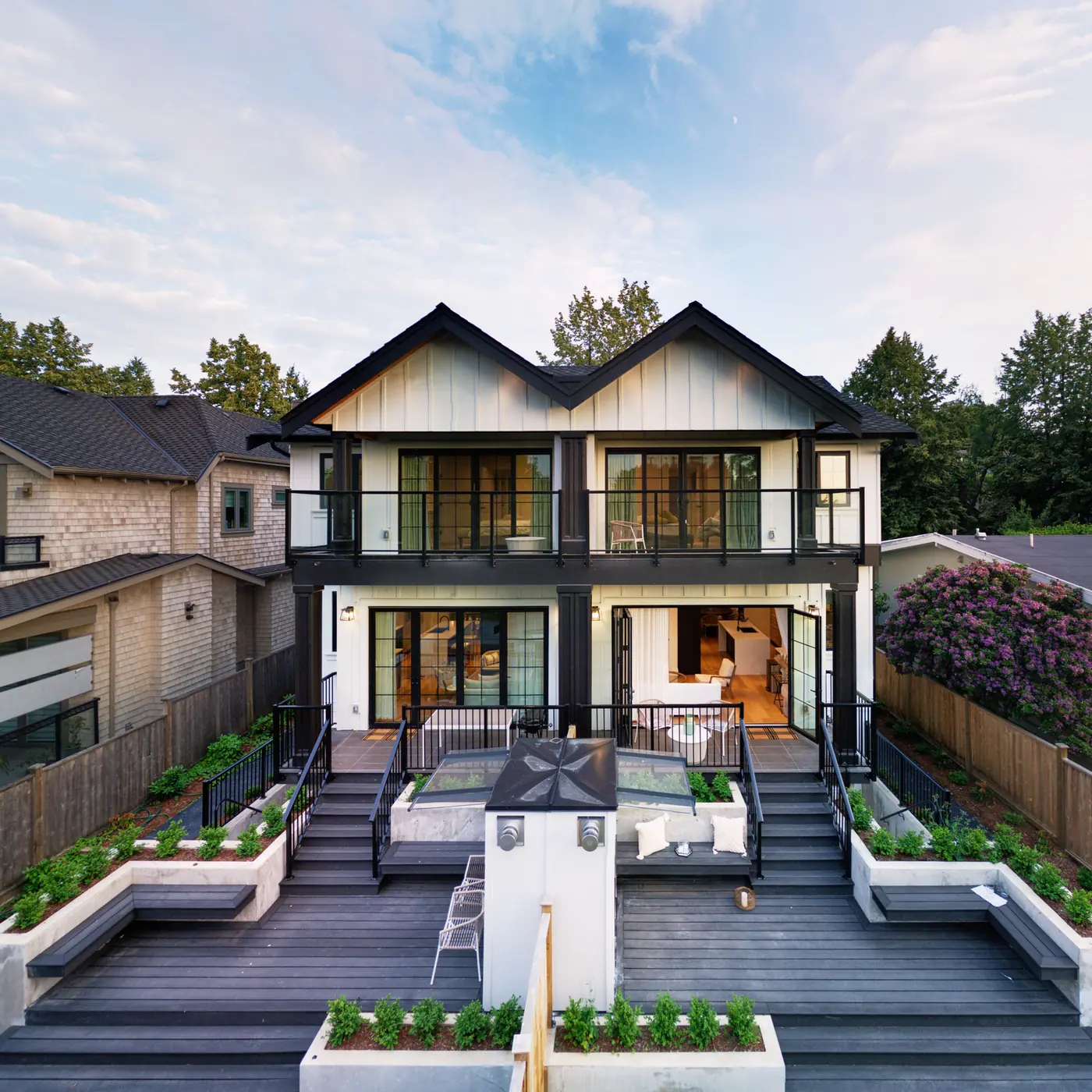
By Costar's own account, each project has a construction manager who coordinates the subtrades and checks finished work against the plans before the next stage. On a lot with protected trees, that includes checking the fence line before excavation. Costar's project gallery lists Quilchena Farm House Landscaping at 2174 W 32nd Ave, Vancouver, as custom home landscaping under construction and management.
Whether you plan a custom home or a multiplex, bring your survey to a one-hour consultation and we will go through the trees with you. Tell us about your project today.
Related on this site: Custom homes in Metro Vancouver · Multiplex construction · Book a one-hour project consultation