

Choosing a Builder
Who Should I Call for a Restaurant or Shop Fit-Out in Vancouver?
The short answer
Call a general contractor that builds commercial tenant improvements, which is building work inside a leased shop or restaurant space. Do it before you sign the lease, with your menu or product plan in hand. The contractor plans the work, the trades and the permits. For a restaurant or cafe, the plans also go to Vancouver Coastal Health, because BC law says no one may build or change a food premises until a health officer approves the plans.
Sources checked on November 15, 2026. Rules change, so confirm them before you act.
Who Does What on a Fit-Out
You sign the lease, and the lease decides what you may change in the unit and who approves your drawings, so read it with your lawyer before you commit. The general contractor builds the space and coordinates the trades: the electrician, the plumber, the gas fitter and the finishing trades. A designer draws the plans, and some contractors do the design too.
Outside your team there are two offices to deal with. Ask the City of Vancouver which permits and licences your unit and your business need before drawings start. For any business that serves food, a health officer must approve the plans first. The Province's list of regional health authorities names Vancouver Coastal Health as the health authority for Vancouver and Richmond.
A clothing store or a print shop has a shorter list than a restaurant, because the kitchen brings in the health plan, the grease interceptor and the exhaust hood. For a nail or beauty salon, read our post on nail salon build-outs in Vancouver.
A Restaurant or Cafe Needs Health Approval Before Building
BC's Food Premises Regulation sets the order of a food fit-out. Section 3(1) says a person must not build or make alterations to food premises unless a health officer has approved the plans and specifications. Section 6(1) says you must not operate until those plans were approved and the space was built and kept to match the permit.
Section 4(1) lists what the space must have. It must be connected to drinking water and to a waste disposal system, supply hot and cold water in enough quantity and pressure, have enough lighting to clean and run it, and have ventilation equipment that prevents smoke, grease, water vapour and odours from building up. The ventilation rule is why we look at the kitchen hood and the route of its duct before anything else.
Section 8(6) says a permit to operate a food service establishment is not transferable. If you take over a unit from a closing restaurant, its permit stays with the old operator, and you apply for your own. Our post on cafe and restaurant fit-out approvals walks through what the health plan must show.
The Grease Interceptor
A grease interceptor is a tank on the drain line that holds back fats, oils and grease before the water reaches the sewer. Metro Vancouver's grease interceptor page says the rules apply to commercial kitchens and operations that prepare, package, serve, sell or otherwise handle food, and names restaurants, fast-food operations, cafeterias, bars, grocery stores and bakeries.
The interceptor must be pumped out every 90 days, or sooner when fats, oils, grease and solids are more than 25% of the total liquid depth. You keep two years of records on hand for inspection. Metro Vancouver says violations may bring re-inspection fees of up to $500 or a fine, and that having no grease interceptor carries a minimum fine of $2,000. Ask whether the unit already has one before you sign, and whether it is sized for your sinks and equipment.
Check the Trades Before They Start
Technical Safety BC's licences page says contractors and companies working with regulated systems and equipment must be licensed by it, and electrical and gas are two of its licence types. Its Find a Licensed Contractor guide lets you search by company name or licence number. The results show the scope of work the contractor may do and any enforcement action Technical Safety BC has taken since 2022. Only active licences appear, so a contractor you cannot find may not be allowed to do the work.
WorkSafeBC's clearance letter page says a clearance letter confirms a business is registered with WorkSafeBC and paying its premiums. If a subcontractor you hire is not paying, you could be liable for the premiums on the work they did for you. WorkSafeBC says to get a letter before and after the work, addressed to you, showing the business was active and in good standing for the whole contract period.
Then plan how you pay. BC's Builders Lien Act defines an improvement to include anything built, altered or added to on land. Section 4(1) says the person primarily liable on each contract must keep back 10% of the value of the work or of each payment, whichever is greater. Section 8 says the holdback period ends 55 days after a certificate of completion is issued, or, with no certificate, 55 days after the contract is completed, abandoned or terminated. Ask your lawyer how this applies to your lease and your contract.
- General contractor: a written contract, a schedule tied to your opening date, and a clearance letter.
- Electrical and gas contractors: a Technical Safety BC licence that you look up yourself.
- Every company on site: a WorkSafeBC clearance letter addressed to you.
Fit-Outs Costar Has Built in Vancouver
Our commercial and tenant improvement page says Costar runs the same construction-manager-led process we use on homes: one point of contact coordinating permits, subtrades and inspections against a schedule the client can see. We work this way because a fit-out has to be ready by the lease start or the opening day.
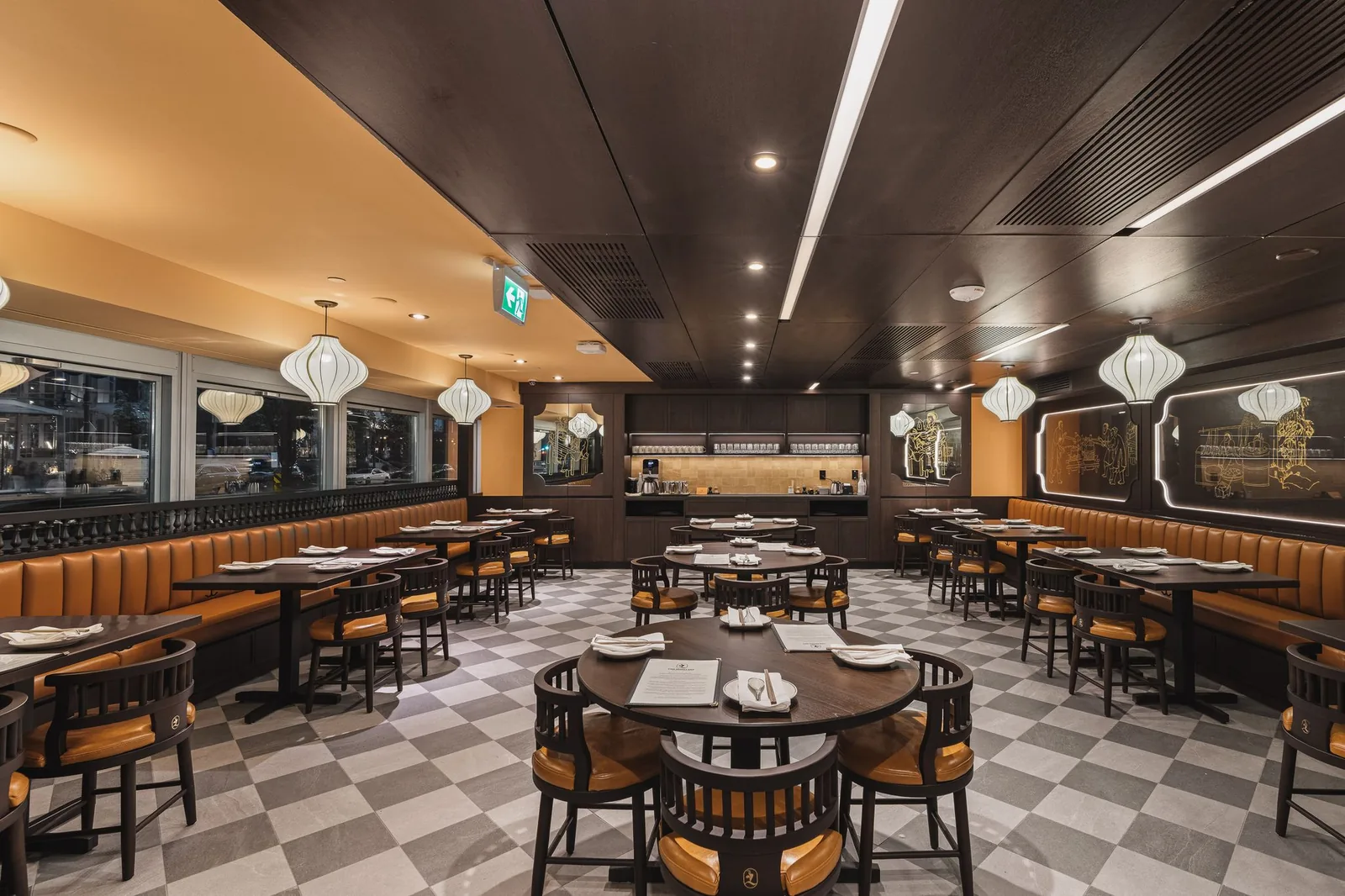
Our project gallery lists food and retail work across Vancouver. Linh Noodle Bar at 1029 W Cordova St and Swiss Cafe at 5970 University Blvd are listed as design, construction and management. Gong Cha at 2887 E 12th Avenue and Ding Tea Renfrew at 1808 Renfrew St are listed as construction and management. Pure Nail Bar at 3739 Rupert St is a salon fit-out with design, construction and management, and Formwerk Office at 290 West 3rd Avenue is an office. The photo at the top of this page is the dining room at Linh Noodle Bar.
Our guide to the tenant improvement process from lease to opening day covers the steps in order. If you have a unit in mind, book a consultation and bring the floor plan and your menu or product list.
Other Questions People Ask
Can I use the last restaurant's health permit when I take over the unit?
No. Section 8(6) of BC's Food Premises Regulation says a permit to operate a food service establishment is not transferable, so you apply for your own.
Who approves the plans for a restaurant in Vancouver?
A health officer. The Food Premises Regulation says no one may build or alter food premises until a health officer approves the plans, and the Province lists Vancouver Coastal Health as the health authority for Vancouver.
How often must a restaurant's grease interceptor be pumped?
Every 90 days, or sooner when fats, oils, grease and solids are more than 25% of the total liquid depth, according to Metro Vancouver. Keep two years of records for inspection.
How much should I hold back from my fit-out contractor?
Section 4(1) of BC's Builders Lien Act says the person primarily liable on a contract must keep back 10% of the value of the work or of each payment, whichever is greater. Ask your lawyer how it applies to your lease.
Sources
Every rule and figure on this page comes from the pages below, each opened and read on the date shown.
- Food Premises Regulation, B.C. Reg. 210/99 (current to November 10, 2026)BC Laws, Province of British Columbia. Checked 2026-11-15. Section 3(1) plan approval before building or altering, section 4(1) water, waste, lighting and ventilation, section 6(1) no operating before approval, section 8(6) permit not transferable.
- Regional Health AuthoritiesGovernment of British Columbia. Checked 2026-11-15. Vancouver and Richmond are served by Vancouver Coastal Health.
- Grease Interceptor RequirementsMetro Vancouver. Checked 2026-11-15. Which businesses the rules cover, pumping every 90 days or at 25% of liquid depth, two years of records, re-inspection fees up to $500 and the $2,000 minimum fine for having no interceptor.
- LicencesTechnical Safety BC. Checked 2026-11-15. Contractors and companies working with regulated systems and equipment must be licensed; electrical and gas are licence categories.
- Find a Licensed Contractor: Registry GuideTechnical Safety BC. Checked 2026-11-15. Search by company name or licence number, the scope of work and enforcement action since 2022 in the results, and only active licences listed.
- Why do I need a clearance letter?WorkSafeBC. Checked 2026-11-15. What a clearance letter confirms, the liability for a subcontractor's unpaid premiums, and a letter addressed to you before and after the work for the whole contract period.
- Builders Lien Act, SBC 1997, c. 45 (current to November 10, 2026)BC Laws, Province of British Columbia. Checked 2026-11-15. The definition of improvement, the 10% holdback in section 4(1) and the 55-day holdback period in section 8.
Start the conversation