
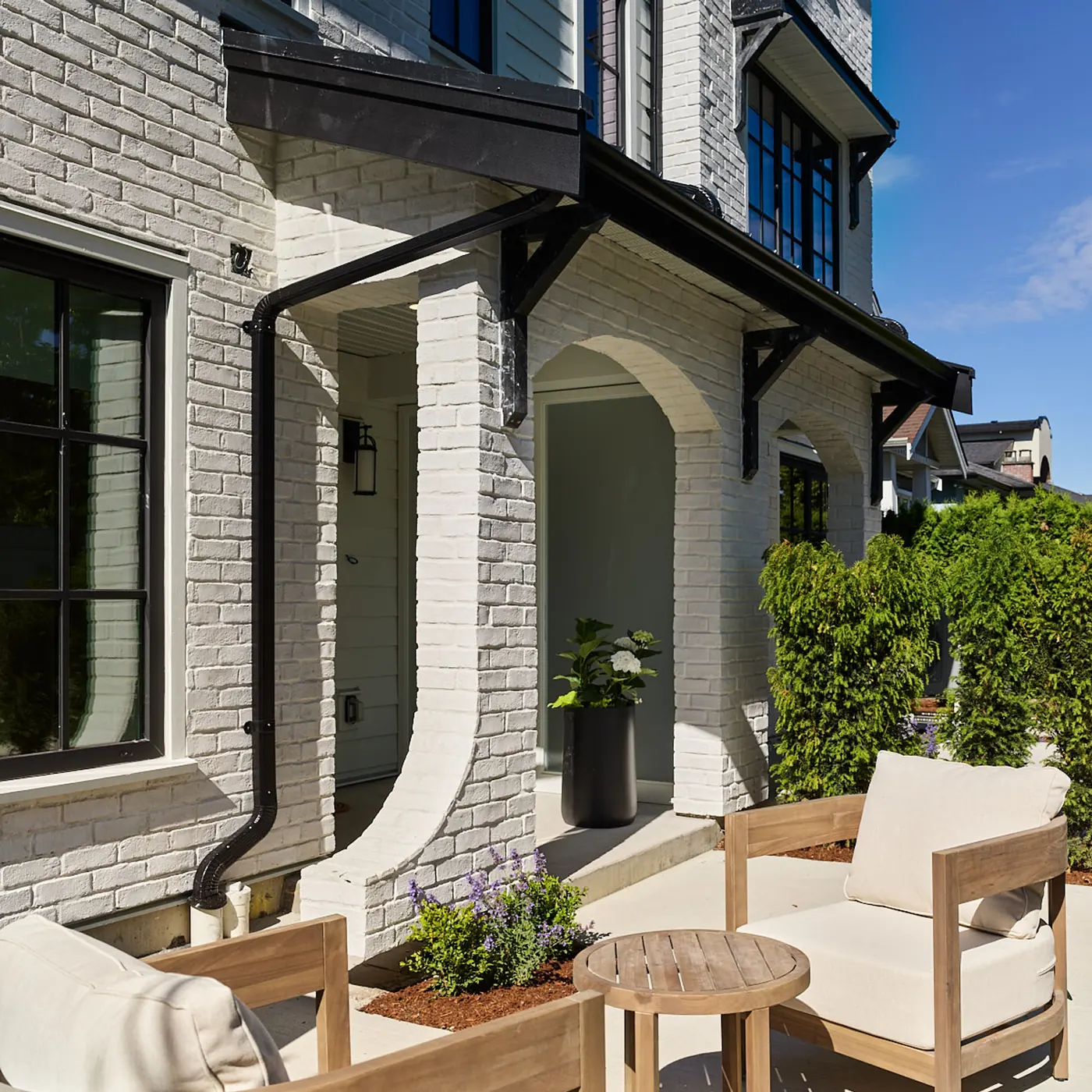
Many Vancouver families want grandparents, parents and children to live close together. A single house on a single lot can make that hard, because each household needs its own space and its own routine.
A multiplex can solve it. In this post we explain why multi-generational families are looking at multiplexes, what Statistics Canada says about how common this way of living is, and which provincial law made it possible to build more than one home on a house lot. We compare the idea to the Vancouver Special in a separate post, The Vancouver Special Then and Now.
How Common Is Living With Three Generations?
Statistics Canada defines a multigenerational household as one where at least three generations of the same family live together, such as grandparents, parents and children. Its article Living under one roof reports that just under 2.4 million Canadians lived in one in 2021. There were 441,750 such households, which is 2.9% of all private households in Canada and 8.6% more than in 2016.
In British Columbia the share was 3.7% of households. Statistics Canada gives two main reasons families choose this: to save money and to care for aging parents. Both reasons are familiar to the families we meet in Metro Vancouver.
What a Multiplex Gives Each Generation
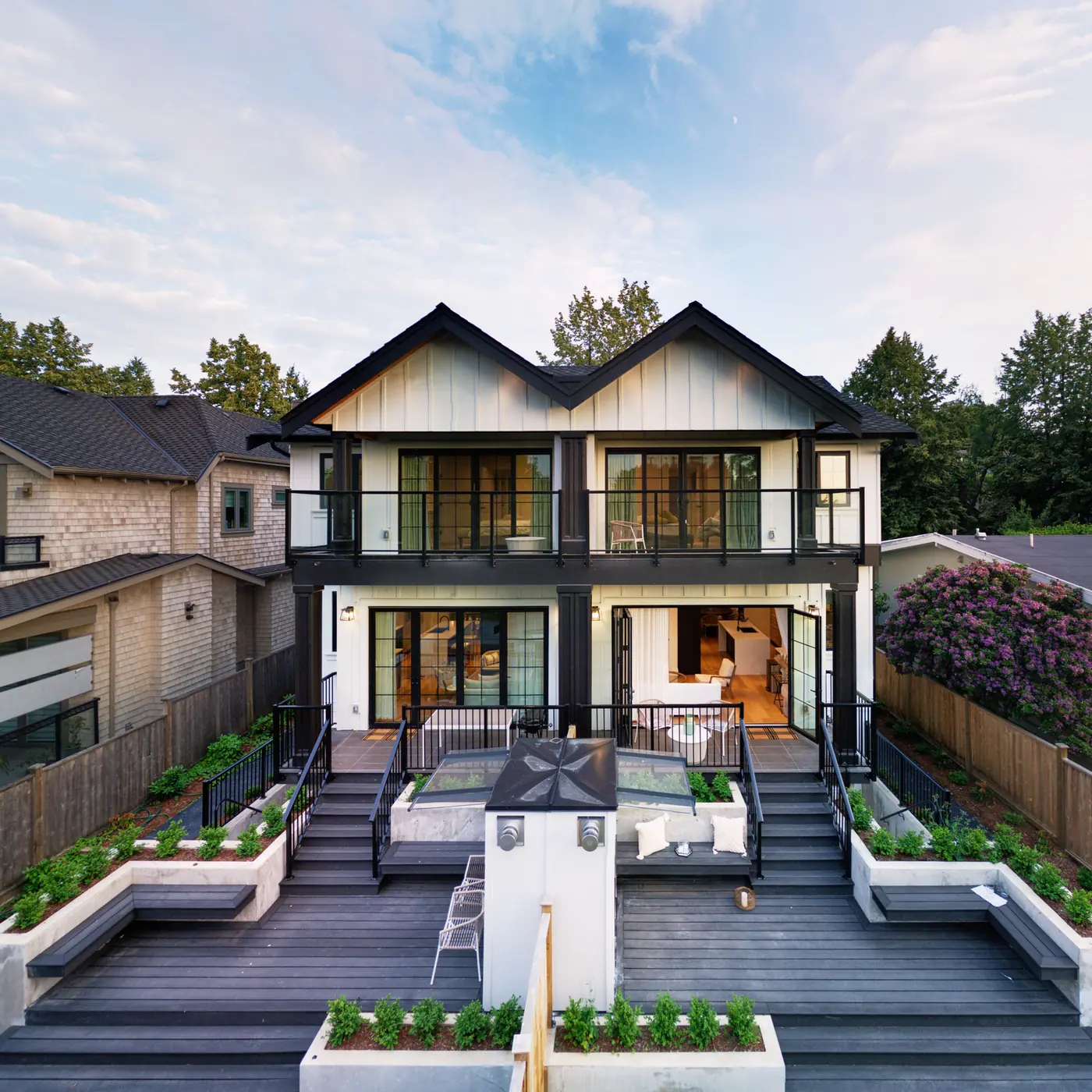
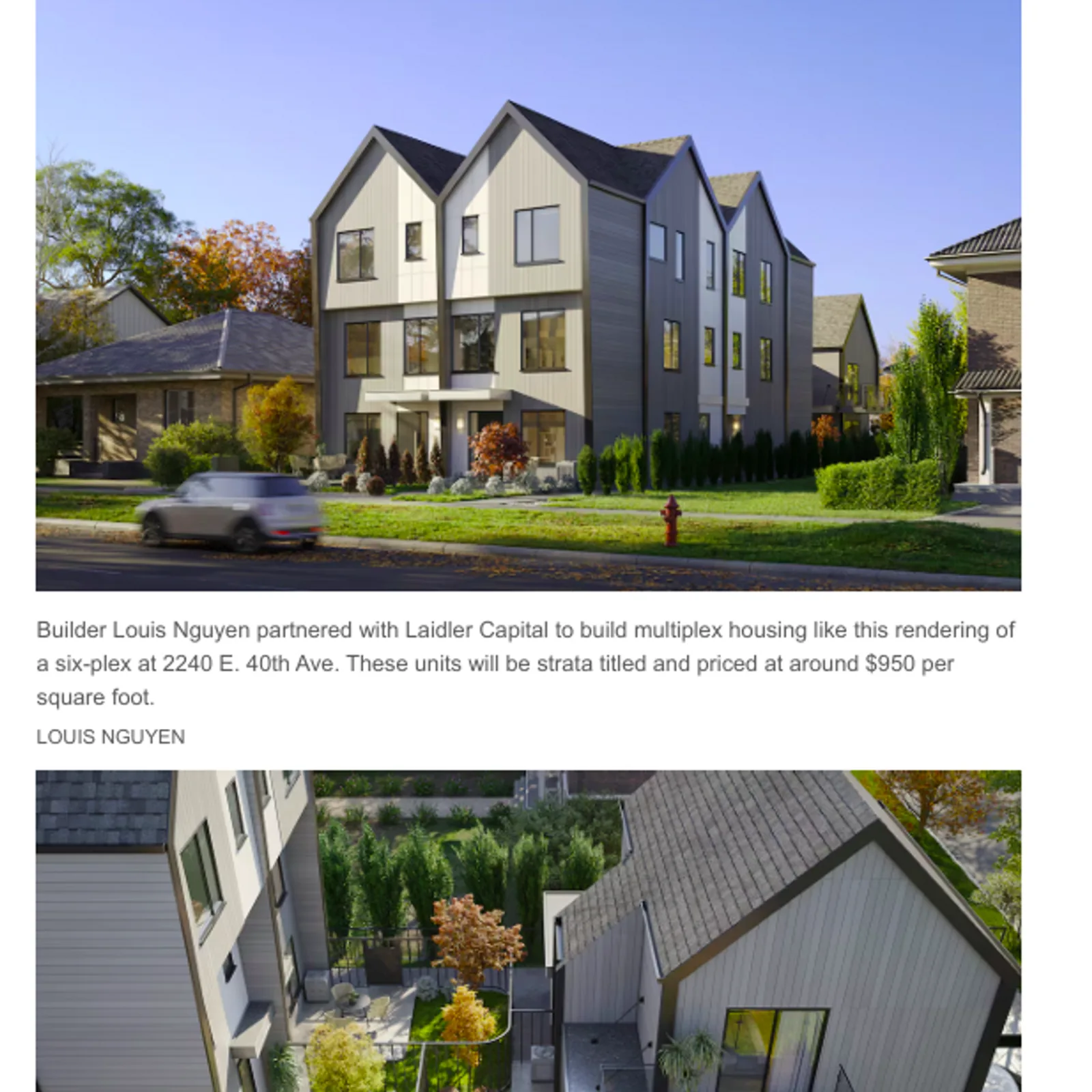
A multiplex is several homes on one lot. Each home has its own front door, its own kitchen and its own bathroom. For a family this means that grandparents, parents and children share a property and keep separate households.
The layout we plan most often follows the same idea. The grandparents live on the ground floor, with no stairs between the front door, the bedroom and the bathroom. The young family lives on the floors above. The children grow up one floor away from their grandparents, and each household closes its own door at night. We describe this plan floor by floor in Designing a Multiplex for Three Generations in Vancouver, including the BC Building Code rules that apply to each floor.
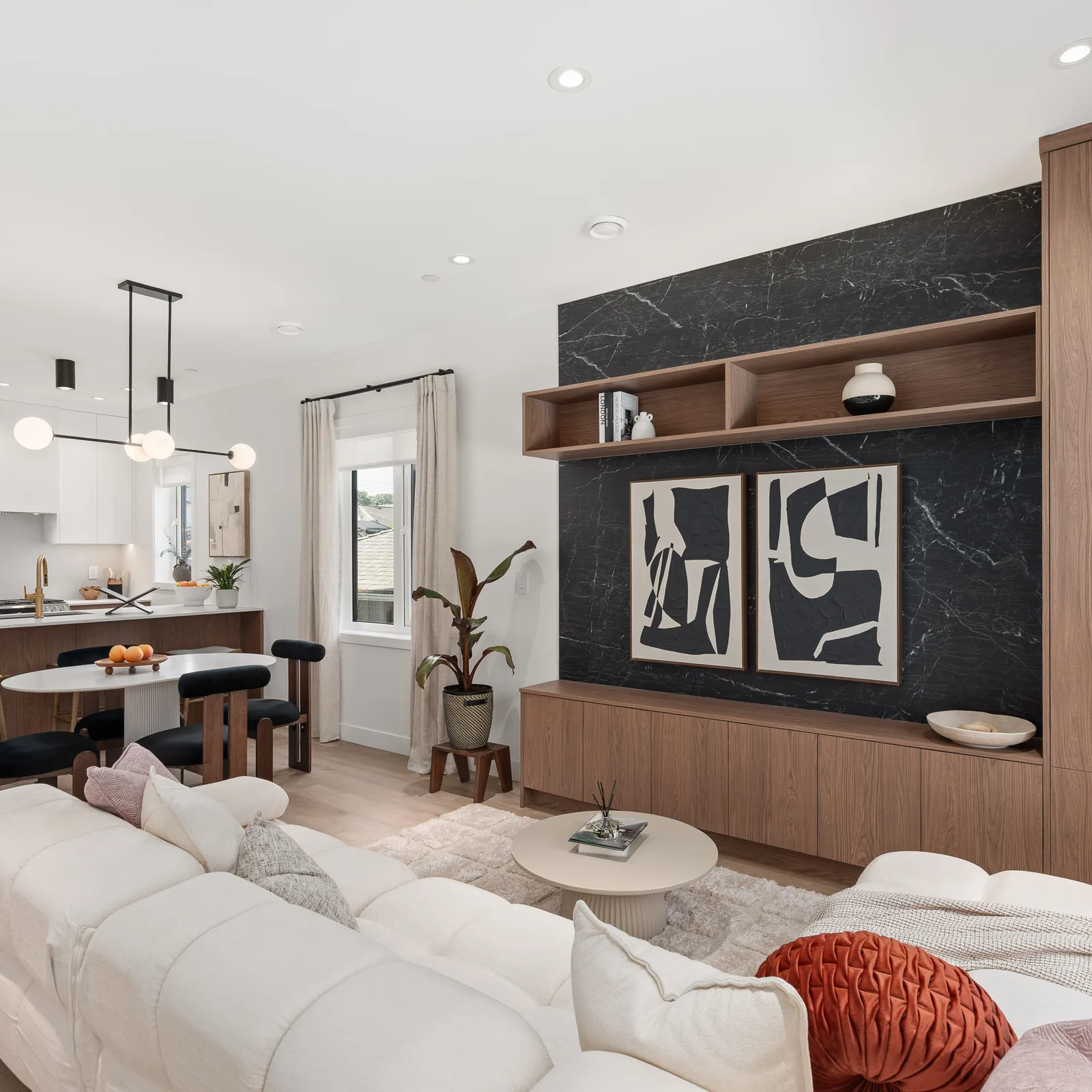
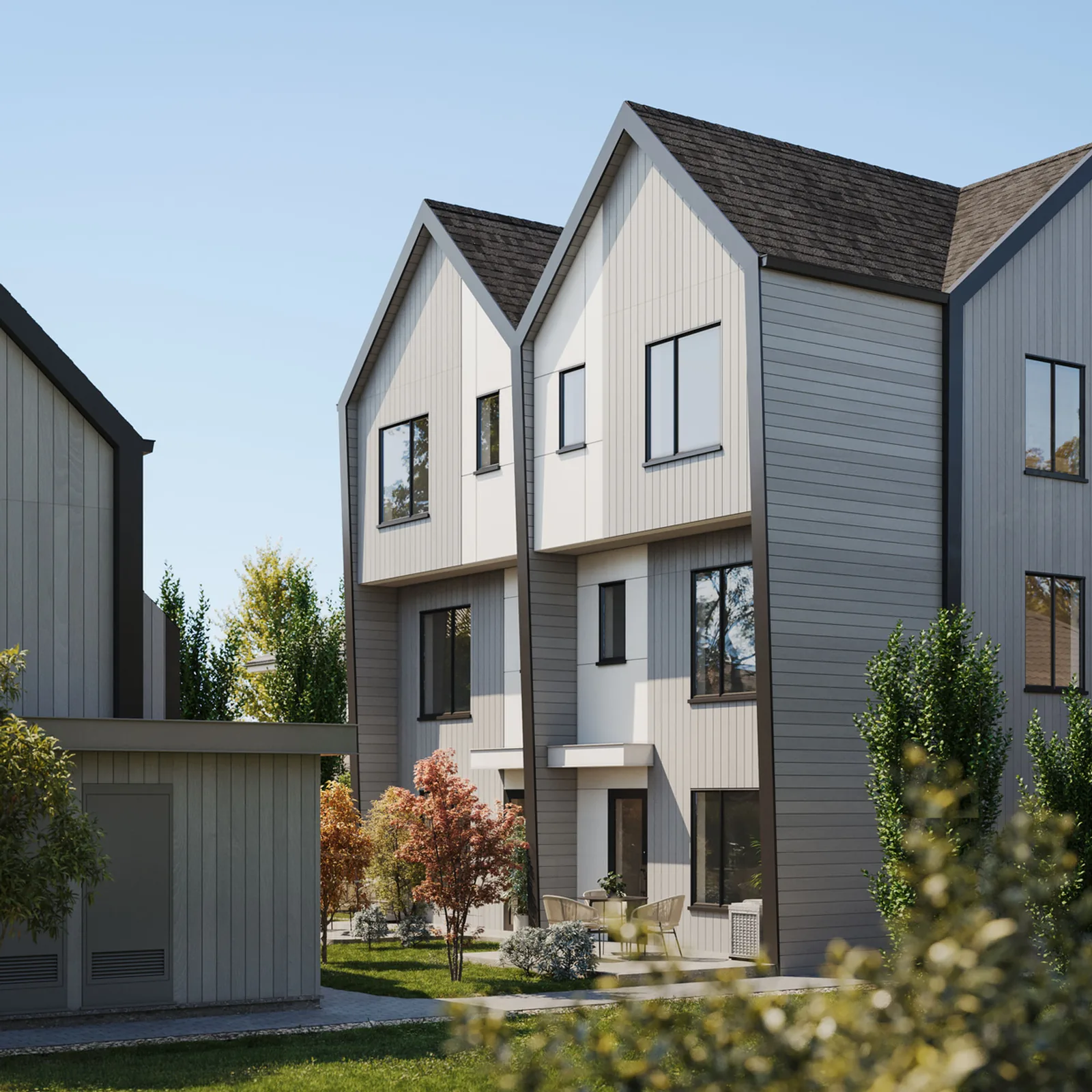
Our We Killarney Townhomes project is a six-unit multiplex in Vancouver, and it shows this type of planning in a finished building.
The Law That Made It Possible
Until recently, most Vancouver house lots allowed one house, or a duplex. Adding more homes usually meant asking the City to rezone the lot, which takes time and money. A provincial law changed that. The BC small-scale multi-unit housing law, which began with Bill 44 in 2023, requires cities to allow more homes on lots that used to allow only a house or a duplex.
The Province's page on small-scale, multi-unit housing lists the home types it has in mind: secondary suites inside a house, laneway homes and garden suites, triplexes, townhomes and house-plexes. The law sets the minimum, and each city's zoning bylaw sets the rest, so the number of homes allowed on your lot depends on its size and its location.
Two Costar posts go through the details. What Every BC City Must Now Allow explains the provincial rules. Multiplex Zoning and Permits in Vancouver explains how they apply to a Vancouver lot.
What Homeowners Can Do First
Start with the lot. Find your zoning, your lot size and the distance to the nearest frequent bus route, and compare them with your city's bylaw. Those three facts decide how many homes the lot may hold.
Then decide who will live in each home. A family that plans for grandparents on the ground floor makes different choices from a family that plans to rent two of the homes. The cost guide for a Vancouver multiplex explains what each choice adds to the budget.
Costar won Best Multiplex Home at the 2024 Georgie Awards, given by the Canadian Home Builders' Association of BC, for the project It Takes Two. We offer a complimentary one-hour project consultation to homeowners who are looking at a multiplex, to check the lot and talk through the plan.
Related on this site: Multiplex construction in Vancouver · Costar in REW's guide to building a multiplex · We Killarney Townhomes, a six-unit multiplex in Vancouver