When a family in Vancouver decides to build a new house or a multiplex, the first questions are about design, budget and permits. The question of who keeps the site safe comes much later, if it comes at all. BC law answers it for you: if nobody signs a written agreement to take the role, the owner of the land is the prime contractor. In this post, we walk you through what the prime contractor is, what the law asks of that person, what stays with you as the owner, and what to put in writing before the first trade arrives.
Every rule below comes from Part 2 of BC's Workers Compensation Act, Part 20 of the Occupational Health and Safety Regulation, and WorkSafeBC's own pages, all read on November 4, 2026. For a decision with legal or insurance weight, talk to a lawyer or to WorkSafeBC directly.
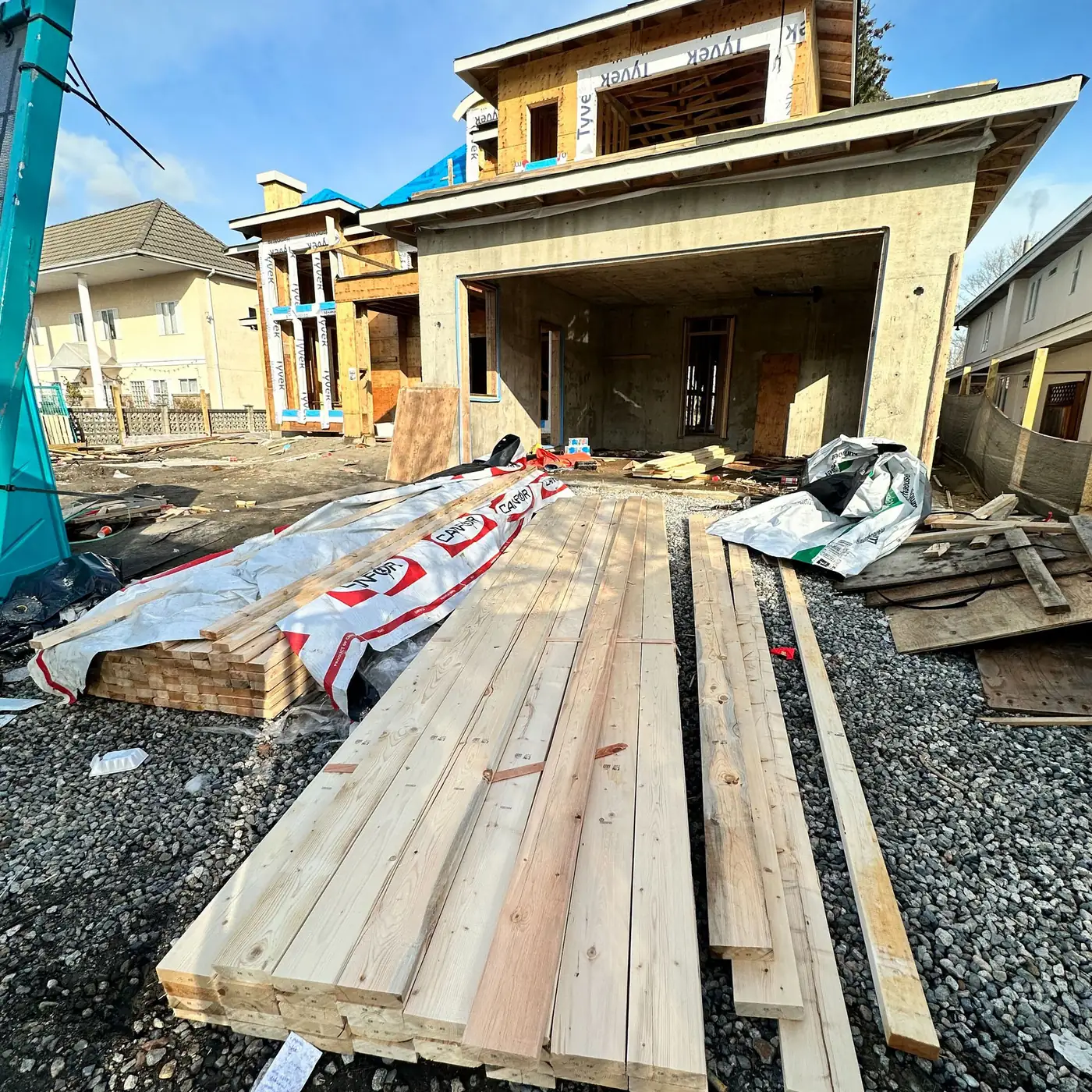
A building site for a house or multiplex has many employers on it. The excavation company, the framers, the plumber, the electrician, the roofer and the drywall crew each employ their own workers. The Act calls a place like this a "multiple-employer workplace": a workplace where workers of 2 or more employers are working at the same time.
Someone has to make sure all of those crews work safely together. The framers should not be working above the plumbers without a plan. The excavation must be protected before anyone climbs into it. That person is the prime contractor.
The Act's definition has two parts:
- The prime contractor is the directing contractor, employer or other person who enters into a written agreement with the owner to be the prime contractor.
- If there is no such written agreement, the owner of the workplace is the prime contractor.
The Act also gives "owner" a wide meaning. It includes a tenant, a lessee, an occupier, and a person who acts for the owner as an agent. For most families building on their own lot in Vancouver, the owner is simply you.
Section 24 of the Act sets out the main duty in two lines. The prime contractor of a multiple-employer workplace must:
- ensure that the health and safety activities of the employers, workers and other people at the site are coordinated, and
- do everything that is reasonably practicable to set up and keep a system that makes the site follow BC's safety rules.
Each employer on site must give the prime contractor the name of the person who supervises its workers there.
Part 20 of the Regulation adds more detail for construction.
Section 20.3 says each employer must tell the owner, or the prime contractor, in advance about any task likely to create a hazard for another employer's workers. When the work of 2 or more employers overlaps or sits side by side and creates a hazard, and the combined workforce is more than 5, the owner or prime contractor must:
- appoint a qualified coordinator for health and safety at that location,
- post a site drawing that shows the project layout, the first aid location, how an injured worker would be transported, and the evacuation meeting point, and
- keep a set of written construction procedures on site.
On a busy day on a Vancouver multiplex, the framers, the plumber and the electrician may all be working in the same building, and their crews together can pass 5 workers.
Section 20.2 says the owner, or the person the owner engaged as prime contractor, must make sure WorkSafeBC receives a written notice of project at least 24 hours before work starts, if any of these applies:
- The estimated total cost of labour and materials is more than $100,000.
- Part of the project is designed by a professional engineer, other than pre-engineered or pre-manufactured parts.
- The project is new construction, a major alteration, a structural repair or a demolition of a building more than 2 storeys or 6 metres high.
- A worker may need to enter a trench over 30 metres long, or an excavation other than a trench over 1.2 metres deep.
The list also covers bridges, cofferdams and tall retaining walls, which rarely apply to a house. A copy of the notice must be posted on site for the whole project. If the information changes in a large way, WorkSafeBC must receive the update.
A new Vancouver house or multiplex with a basement, or with a cost of labour and materials above $100,000, meets at least one of these tests. Ask whoever holds the prime contractor role to show you the notice before the excavator arrives.
Signing a prime contractor agreement moves the coordination work to your builder. Three duties stay with you. Section 25 of the Act says every owner of a workplace must:
- Keep the Land Safe. Provide and maintain the land and premises used as a workplace in a way that protects the health and safety of people at or near it.
- Share What You Know. Give the employer or prime contractor the information you know that they need to find and control hazards at the site.
- Follow the Rules. Comply with the safety provisions, the Regulation and any orders.
The second duty is the one you can act on before work starts. Think about what you know about your lot that a builder would not see on the first visit:
- A hazardous materials report on the old house. Our post on the hazardous materials survey explains why this comes first.
- An old heating oil tank, buried or in the basement.
- A shared retaining wall, a weak fence, or a slope at the property line.
- Power lines over the lot or a known problem with the old service.
- Where children from the neighbourhood like to cut through.
Write these down and give the list to your builder at the first site meeting. It costs you nothing and it can prevent an injury.
WorkSafeBC runs the insurance that pays workers who are hurt on the job. Its homeowners page says that a homeowner acting as prime contractor on the construction of their own home is subject to the health and safety parts of the Act, and may also need to register with WorkSafeBC.
The same page gives one clear piece of advice: get a clearance letter for each contractor. A clearance letter is a free document from WorkSafeBC that confirms a business is registered and paying its premiums. Without it, WorkSafeBC says you could be held jointly liable for a contractor's unpaid premiums for the time they worked for you.
WorkSafeBC's clearance letter page adds two details:
- Get a letter before the contractor starts and again after the work is done.
- To be clear of liability, the letter must be addressed to you and must show the contractor as "active and in good standing" for the entire period of the contract.
A clearance letter covers premiums only. Ask about the quality of the work and the contractor's safety record separately.
Decide Who Holds the Role. If you hire a builder or construction manager, agree in writing that they are the prime contractor for the purposes of the Workers Compensation Act. Without that sentence, the law points back to you.
Read the Clause Itself. The contract should name the prime contractor, the site address, and the start and end of the role. Ask when the role ends, and ask what happens if you hire your own trade (a landscaper, a security installer) while the builder is still on site.
Hand Over Your Hazard List. Give the builder the reports and facts you already know, in writing.
Ask for the Notice of Project. Ask for a copy of the notice sent to WorkSafeBC, and look for it posted on site.
Collect Clearance Letters. If you hire any trade directly, get WorkSafeBC clearance letters before they start and before the final payment.
Book Your Site Visits. Visiting your new home as it goes up is one of the best parts of building. Arrange each visit with the site lead, wear the hard hat and boots they ask for, and leave children at home on days with an open excavation, a crane or work on the roof.
Costar's process page describes how a construction manager supervises the crew and subtrades through the build, and how clients may visit the site and receive regular updates. Costar's process page also asks every client to have their Costar consultant confirm in writing the insurance and WorkSafeBC coverage that apply to their project. We think that is the right way to start: the roles are on paper before anyone digs.
If you are deciding whether to manage the trades yourself or hire a builder, our post on owner-builder or licensed builder sets out the BC licensing and warranty rules, and our post on choosing a multiplex builder lists the questions to ask in an interview.
If you would like to talk through who does what on your project, our team is glad to help. Tell us about your project today. Book a consultation.
Related on this site: Custom home construction in Vancouver · Multiplex construction in Vancouver · Book a one-hour project consultation