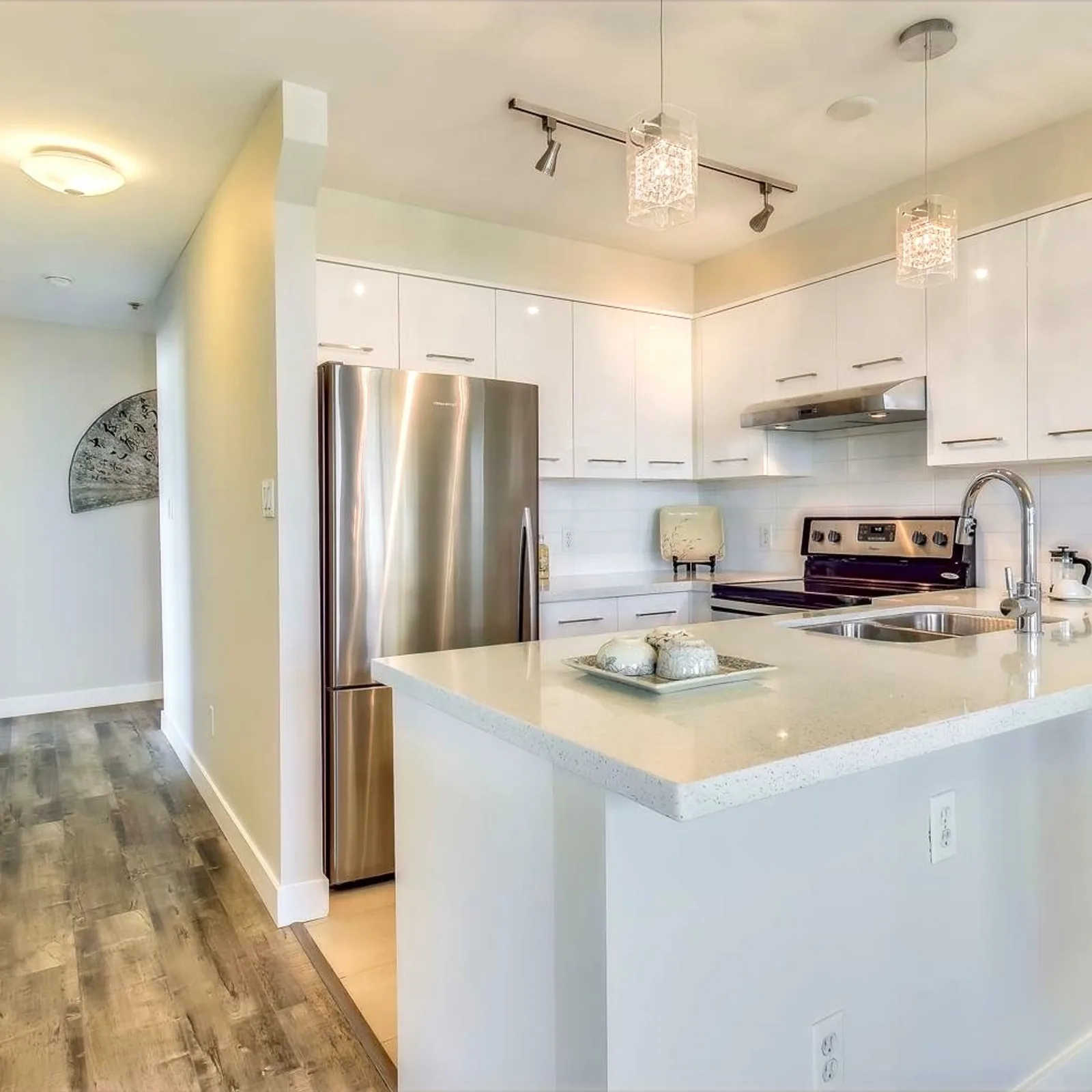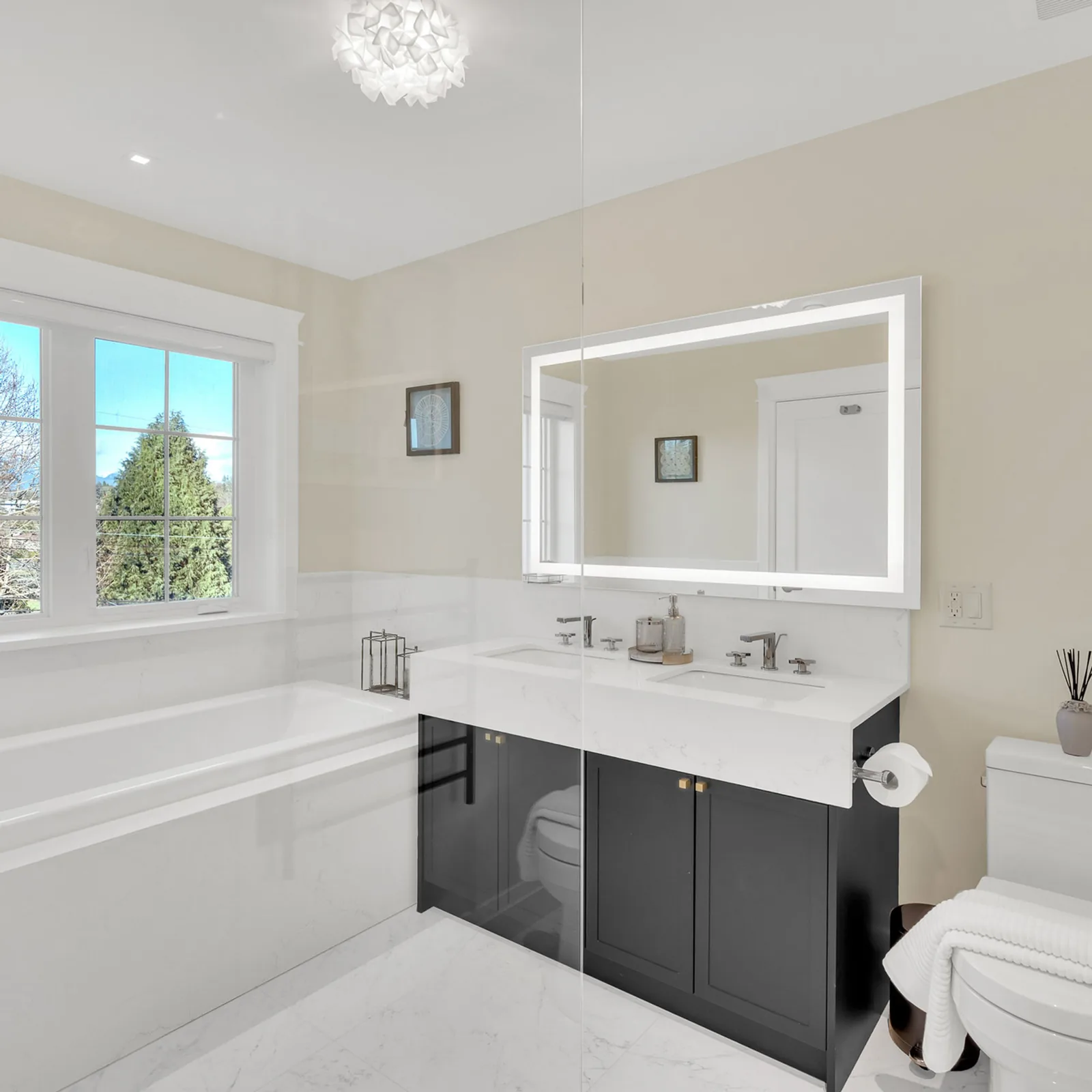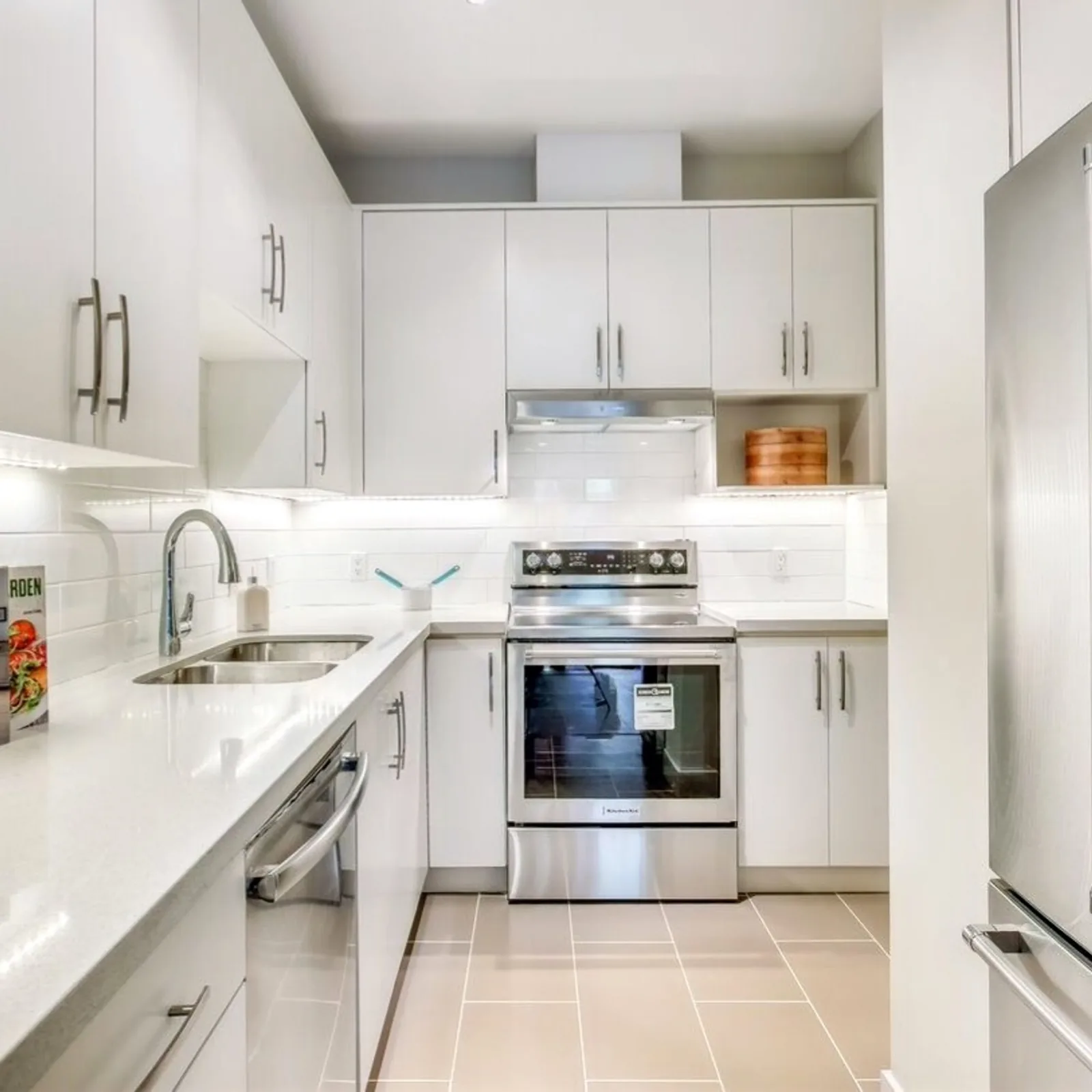

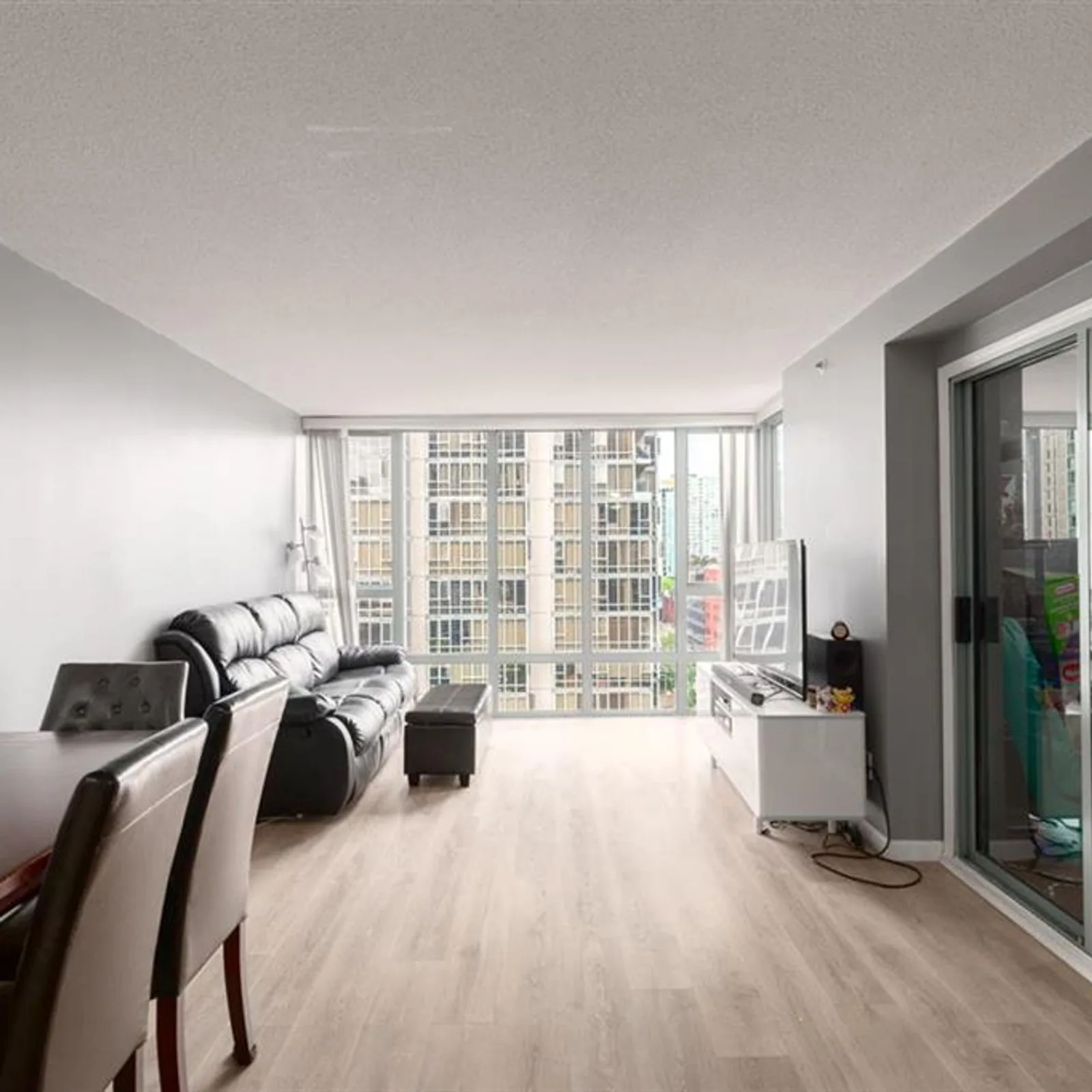
A condo renovation in Vancouver has more people involved than a house renovation. Your neighbours live on the other side of the wall, the strata council decides what you may change, and the City sets the hours your crew may work. In this post we walk you through the documents to read first, what an alteration agreement usually asks of you, which work needs a City permit, the rules for noise and the elevator, and who pays when something goes wrong.
The approval rules for the kitchen and the bathroom themselves are in our guides to kitchen renovation permits and bathroom renovation permits. This post covers the rest of the project: the paperwork, the building and the risk.
Read Three Documents Before You Plan
Start with your strata's bylaws. Section 120 of BC's Strata Property Act says a strata's bylaws are the Standard Bylaws, except where the strata has filed different bylaws at the Land Title Office. Your building may have filed its own. The Province's page on bylaws and rules gives examples: bylaws can set quiet hours, and they can require written permission before an owner moves walls, changes flooring or makes plumbing or electrical changes. The Province says these are often known as alteration agreements.
Next, ask for the rules. Rules are separate from bylaws. Under section 125 of the Act, a strata can make rules for the use, safety and condition of common property, which is the part of the building owned by all owners together: the lobby, the hallways, the elevators, the loading area. Booking the elevator, padding its walls and using the loading bay all fall under rules like these.
Third, look at the strata plan. It shows where your strata lot ends and common property begins. A wall, pipe or duct on the line between your unit and the common property may belong to everyone.
The Province says a strata must give an owner access to its bylaws and rules within one week, and may charge up to 25 cents a page.
What Needs the Strata's Written Approval
Our kitchen and bathroom guides list the parts of a strata lot covered by Standard Bylaw 5. In short, the strata must approve in writing any change that touches the structure, the exterior, common property inside your unit, or the parts of your unit the strata must insure. Standard Bylaw 6 adds a separate approval for any change to common property, including limited common property such as your balcony.
Which jobs draw the most questions? The Condominium Home Owners Association of BC (CHOA), a non-profit group for strata owners, answered this in its bulletin 300-1011. It says new carpet, paint, cabinet upgrades and new light fixtures rarely need much review. Hardwood floors, moved plumbing fixtures, changed appliance locations and work on walls, wiring, ventilation, soundproofing, fire safety or heating get closer review. The bulletin gives the reason for floors: in a wood frame building, carpet is part of the sound control, and hardwood carries more sound to the unit below.
Standard Bylaw 5 says the strata must not refuse approval without a reason. CHOA's bulletin adds that a strata may still ask for written details first: what is changing, who is doing the work, how the job will be managed, how demolition waste will leave the building, which permits are needed, and who pays and carries the liability.
What an Alteration Agreement Usually Covers
Bylaws 5 and 6 let the strata ask you to agree, in writing, to take responsibility for any expenses relating to the change. That written promise is the core of an alteration agreement. Each strata writes its own, so read every clause of yours.
CHOA's checklist for alterations (bulletin 400-047) lists what a council often asks for. In plain words, expect most of these:
- the name of the owner on title, because the strata contracts with the owner;
- a description of the work, the material specifications and any drawings;
- an engineer or other professional to inspect the work, where the council asks for one;
- a promise to follow the codes, with the permit numbers and copies of the permits;
- the names and phone numbers of the contractors, their WorkSafeBC numbers, and their insurance agent and policy number;
- a change to your own home insurance so it covers the new work;
- a promise that you pay all expenses of the change and repair and maintain it from then on;
- a release of the strata, the council and other owners from liability for the change;
- a promise to tell buyers that the change is yours to maintain;
- your payment of any legal costs to prepare the agreement, for a large change.
Who carries the risk under this agreement? You do. The strata keeps the duty to repair the building, and you take on the cost of everything your change adds or affects. Read the release clause with care, and have your own lawyer review a long agreement before you sign.
The Agreement Comes Up Again When You Sell
Think past the end of the renovation. When you sell, the buyer usually asks the strata for an Information Certificate, called the Form B. Section 59 of the Act says the certificate must disclose any agreement under which the owner takes responsibility for expenses relating to alterations to a strata lot, the common property or the common assets.
CHOA's bulletin 300-982 says alteration agreements do not move to the next owner on their own. It suggests the agreement include a condition that the seller discloses it and the buyer takes it over. Keep your signed copy, the permits and the final inspection with your home records, so a future buyer sees approved work.
Does a Vancouver Condo Renovation Need a City Permit?
The City of Vancouver uses its own Building By-law, so its own pages set the permit rules. vancouver.ca refused our requests, so we read the City's renovate your home page in the Internet Archive copy saved on January 10, 2026. That page lists:
- Permit needed: installing new plumbing, electrical or gas lines; moving existing plumbing, electrical or gas lines; moving interior walls and partitions; structural repairs or changes that your zoning allows.
- No permit needed: painting the inside of your home; replacing fixtures, cabinets and flooring.
The same page describes the City's Residential Renovation Fast Track, which issues permits within one week for simple residential renovation projects under $250,000. Its list of eligible homes includes condos. Removing non-load bearing walls, updating kitchens and bathrooms, and updating plumbing or electrical are eligible. Projects that need structural changes are not. The City may have changed this page since January 2026, so confirm with its Development and Building Services Centre before you apply.
The strata's approval is a separate step from the City permit. Changing carpet to hardwood needs no City permit, and your strata may still ask for a signed agreement before you do it.
Work Hours and Noise in a Vancouver Condo
The City sets the hours. We read the Noise Control By-law in the version consolidated to July 14, 2026, through the Internet Archive copy saved on September 14, 2026. Section 3.1(h)(ii) allows construction noise that disturbs the public only:
- from 7:30 a.m. to 8:00 p.m. on a weekday that is not a holiday;
- from 10:00 a.m. to 8:00 p.m. on a Saturday that is not a holiday.
The bylaw's definition of a holiday includes Sunday, so these hours give no time for noisy work on Sundays or statutory holidays. Its definition of construction is wide. It includes alteration, repair, demolition and painting.
Your strata has its own rules too. Standard Bylaw 3 says an owner, tenant, occupant or visitor must not use a strata lot in a way that causes unreasonable noise or a nuisance to another person. The Province's bylaws page notes that a strata's own bylaws can also set quiet hours. Your crew has to work inside both sets of hours, so give the trades a copy of each.
Before demolition day, send your neighbours a short note with the dates of the loud work, the hours, and a phone number to reach you.
Elevator Booking, Hallways and Deliveries
Section 125 of the Act lets the strata make rules for common property. The rules must be in a written document that can be photocopied, and the strata must tell owners and tenants about a new rule as soon as feasible. A new rule ends at the next annual general meeting unless the owners ratify it there by majority vote. If a rule conflicts with a bylaw, the bylaw applies.
Elevator bookings, protective pads, delivery times, parking for trade vans and garbage bins are all uses of common property, so a strata can set them by rule or in its bylaws. Ask your strata manager how far ahead you must book, whether a deposit or fee applies, and who inspects the hallway afterwards. The Province notes that a rule cannot impose a user fee until the owners have ratified it by majority vote.
The strata can hold you responsible for damage your contractor causes to common property. Standard Bylaw 3 says no one may cause damage, other than reasonable wear and tear, to common property or to the parts of a strata lot the strata must repair or insure. Section 130 of the Act lets the strata fine an owner for a bylaw or rule broken by a person the owner let in for business reasons, which covers your trades. Section 133 lets the strata fix the problem and charge the reasonable cost to that owner.
The Standard Bylaws set the fine at a maximum of $50 for each bylaw contravention and $10 for each rule contravention, and allow a new fine every 7 days for a problem that continues. Your strata may have filed different amounts.
The strata must follow a process first. Section 135 says it must receive a complaint, give you the details in writing, and give you a reasonable chance to answer, including a hearing if you ask for one. CHOA's bulletin 800-014 suggests asking for the evidence behind any damage claim, such as the date, the time and any camera footage. Photograph the elevator and hallway before your trades start, and again when they finish.
Insurance: What the Strata Covers and What You Cover
Section 149 of the Act says the strata must insure common property, common assets, the buildings on the strata plan, and fixtures the owner developer built or installed as part of the original construction. Section 152 lets the strata choose to insure fixtures added later. Section 161 lets you insure improvements to the original fixtures, fixtures added later, and your own liability for property damage and injury.
The Province's page on owner insurance explains what a condo policy is for. It can cover household contents, the cost of living elsewhere after an insured loss, upgrades to the strata lot, and the strata's deductible if you are found responsible. It calls the upgrades "improvements" or "betterments", covered up to a stated limit. CHOA's checklist asks owners to increase this coverage to include the new work and to give the strata a copy of the policy.
Section 154 says the strata must report on its insurance at each annual general meeting and tell owners and tenants as soon as feasible about any material change, including a higher deductible. Read the latest insurance summary before you start, so you know the deductible for water damage.
Who Pays If Something Goes Wrong
Picture a supply line that leaks behind your new dishwasher and runs into the unit below. The strata may claim on its own policy for the damage to the building and to your neighbour's unit, and the policy pays only the part above the deductible.
Section 158 of the Act makes that deductible a common expense, paid through strata fees. It also says the strata may sue an owner to recover the deductible if the owner is responsible for the loss or damage. The Province's strata corporation insurance page says the owner does not have to be found negligent to be held responsible. Its owner insurance page gives the example of a dishwasher water hose that breaks early, and says the owner can be held responsible for the damage.
The amounts are large. The Province says strata deductibles can range from $100,000 to $750,000 and higher, depending on the number of units and the strata's claims history. Its owner insurance page says a condo policy can cover some or all of that deductible.
Your alteration agreement may add its own promises on cost. Your contractor's insurance is a separate policy: ask for the policy before the job starts, and keep a copy with the agreement. Keep three records ready in case of a claim: the signed agreement, the permits with the final inspection, and photos of the work before the walls were closed.
The Condo Renovation, Stage by Stage
-
Gather the Documents
Ask your strata manager for the bylaws, the rules, the strata plan and the latest insurance summary. Read them before you design anything.
-
Plan the Work
Decide what changes and what stays. Moving a sink or a wall affects the strata approval, the City permit and the schedule.
-
Ask for Approval
Send the council a written request with the drawings, the materials, the contractors and their insurance. Wait for the approval letter.
-
Sign the Agreement
Read the alteration agreement with care and have your lawyer review it if it is long. Call your insurer about your improvements coverage and the strata deductible.
-
Get the City Permits
Apply for any building and trade permits the work needs. Give the strata copies if the agreement asks for them.
-
Book the Building
Book the elevator, the loading area and the parking for each delivery and each disposal run. Tell your neighbours the loud dates.
-
Build
Keep the work inside the City's hours and your strata's quiet hours. Protect the hallway and the elevator every day.
-
Close Out
Pass the final inspections, send the strata the documents it asked for, and file everything with your home records for the day you sell.
Practical Tips for a Condo Renovation
Ask Before You Design. Ask your strata manager for the bylaws and rules this week, before you pay for drawings.
Put Every Request in Writing. Bylaws 5 and 6 ask for written approval, so only a written approval counts.
Check Your Own Policy. Ask your insurer two questions: how much improvements coverage you have, and how much of the strata deductible it pays.
Photograph the Common Areas. Take dated photos of the elevator, hallway and lobby on the first and last day.
Share the Hours With Every Trade. Give each trade the City hours and your strata's quiet hours in writing.
Keep One Project File. Store the approval letter, the agreement, the permits and the inspection results together.
How Costar Handles a Condo Renovation
Costar's project gallery lists two condo renovations in Vancouver: the Yaletown Condo at 907 - 950 Cambie St, with a scope of home renovation and staging, and Chez Victoria at 5555 Victoria Drive, also a renovation and staging project.
Costar's process page says the client and Costar agree on a cost plus arrangement during pre-construction, sign a written contract, and submit final drawings for permits and approvals before start dates are set. In a condo, the strata's approval belongs in that same stage, before any start date. Our kitchen service page says a Costar construction manager supervises the crew and the trades and checks the finished work before it is signed off. For bathrooms, see our bathroom service page.
The first step is simple: ask your strata manager for the bylaws, the rules and the strata plan, and bring them to your consultation. We will read them with you and plan the work around your building. Tell us about your project today.
Related on this site: Kitchen renovations in Vancouver · Strata life in a small multiplex · Book a one-hour project consultation