Most Vancouver homes have gas somewhere. A gas furnace or a boiler. A gas water heater. A gas range in the kitchen. A gas fireplace in the living room. A gas dryer in the laundry. A gas BBQ outlet on the deck. Each of these is a regulated installation in BC, and every new installation or alteration needs a permit.
This post explains how gas work is permitted in a Vancouver home, who is allowed to do it, how the permit and inspection process works, and what that means for a homeowner planning a renovation or a new build.
Gas is regulated under BC's Safety Standards Act, a provincial statute that covers several technical trades: electrical, gas, boilers and pressure vessels, elevators, amusement devices and others. Technical Safety BC is the agency that administers the Act. It is a separate agency from the municipal building departments.
Gas installations are governed by the CSA B149 Natural Gas and Propane Installation Code, which is referenced through BC's Gas Safety Regulation. The Code sets out the requirements for pipe sizing, pipe materials, joint types, pressure testing, venting, clearances from combustibles, and appliance connections.
Because the Code is detailed and the risk of error is high (unburned gas leaking into a building can be catastrophic), the Act requires that only certified people do gas work. A certified gas fitter holds a Class A or Class B gas fitter certificate issued by Technical Safety BC. The contractor employing the fitter holds a gas contractor licence.
A homeowner cannot do their own gas work in BC. A general contractor cannot do gas work either, unless the general contractor also holds a gas contractor licence and employs certified gas fitters. In practice, gas work on a Vancouver project is sub-contracted to a dedicated gas contractor.
The gas contractor:
- Pulls the gas permit through their Technical Safety BC account.
- Sends a certified gas fitter to do the installation.
- Pressure-tests the system.
- Requests an inspection from Technical Safety BC.
- Corrects any deficiencies and books a re-inspection if needed.
- Commissions the appliances after the permit is signed off.
The homeowner or the general contractor should confirm that the gas contractor is licensed before the work begins. Technical Safety BC maintains a public register of licensed contractors.
A gas permit is required for any new installation and any alteration to an existing gas system. Common situations in a Vancouver home:
- New construction. Every gas appliance in a new home needs a permit: furnace, boiler, water heater, range, dryer, fireplace, BBQ outlet.
- Adding a gas appliance. Adding a gas range to a kitchen that previously had electric, adding a gas fireplace to a living room, or adding a gas BBQ outlet to a deck.
- Replacing a gas appliance. Replacing a gas furnace or water heater with a new unit. Even a like-for-like replacement needs a permit, because the pipe sizing and the venting must be checked against the new appliance's specifications.
- Relocating a gas appliance. Moving a gas range to a new location in the kitchen, or moving a water heater during a renovation.
- Altering gas pipe. Any change to the gas distribution pipe inside the house, whether to add a branch, cap off a run, or reroute a line.
The only situation in which no permit is required is a straight appliance swap where no gas pipe work is done and the appliance meets the same specifications, which is rare in practice.
The process has four stages: the permit is pulled, the work is done, the inspection happens, and the permit is signed off.
The licensed gas contractor applies for the permit through their Technical Safety BC contractor account. The permit application describes the work: the location, the appliances, the pipe runs. The contractor pays the permit fee. The permit is issued electronically, usually within a day.
The permit is attached to the contractor's account and tied to the project address. The homeowner can ask for a copy of the permit. Keep that copy with the project documentation.
The certified gas fitter does the installation according to the CSA B149 Code. This includes:
- Pipe materials. Natural gas in a house is usually distributed in steel pipe or in a flexible corrugated stainless steel tubing (CSST) system. The pipe must be listed for gas use.
- Pipe sizing. The pipe diameter is sized for the total load of the appliances it serves. The contractor calculates the pressure drop along the pipe run and selects the size accordingly.
- Joints. Threaded joints use pipe dope rated for gas. Compression fittings are not allowed inside buildings. CSST joints use proprietary fittings that are listed for the system.
- Shut-off valves. A shut-off valve is required at each appliance, within arm's reach. A main shut-off is required at the meter.
- Clearances. Gas lines must maintain specified clearances from electrical equipment, ignition sources and sharp bends.
- Venting. Each gas appliance has a vent that carries combustion products out of the building. The vent material, diameter, pitch and termination location are specified by the appliance manufacturer and the CSA B149 Code.
After the gas pipe is installed, the contractor pressure-tests the system. The test applies air at a specified pressure for a specified time. Any drop in pressure indicates a leak, which the contractor finds and corrects.
The contractor requests an inspection through their Technical Safety BC account. An inspector visits the site, confirms the pressure test, checks the installation against the Code, and either signs off the permit or issues a deficiency list.
Common deficiencies include incorrect pipe sizing, missing shut-off valves, insufficient clearances, incorrect appliance venting, and missing combustion air provisions.
After deficiencies are corrected, the contractor requests a re-inspection. The permit is signed off when the installation passes.
Once the permit is signed off, the gas can be turned on and the appliances commissioned. The contractor lights the appliances, confirms the operation, and checks the combustion. For some appliances, a commissioning report is provided to the homeowner.
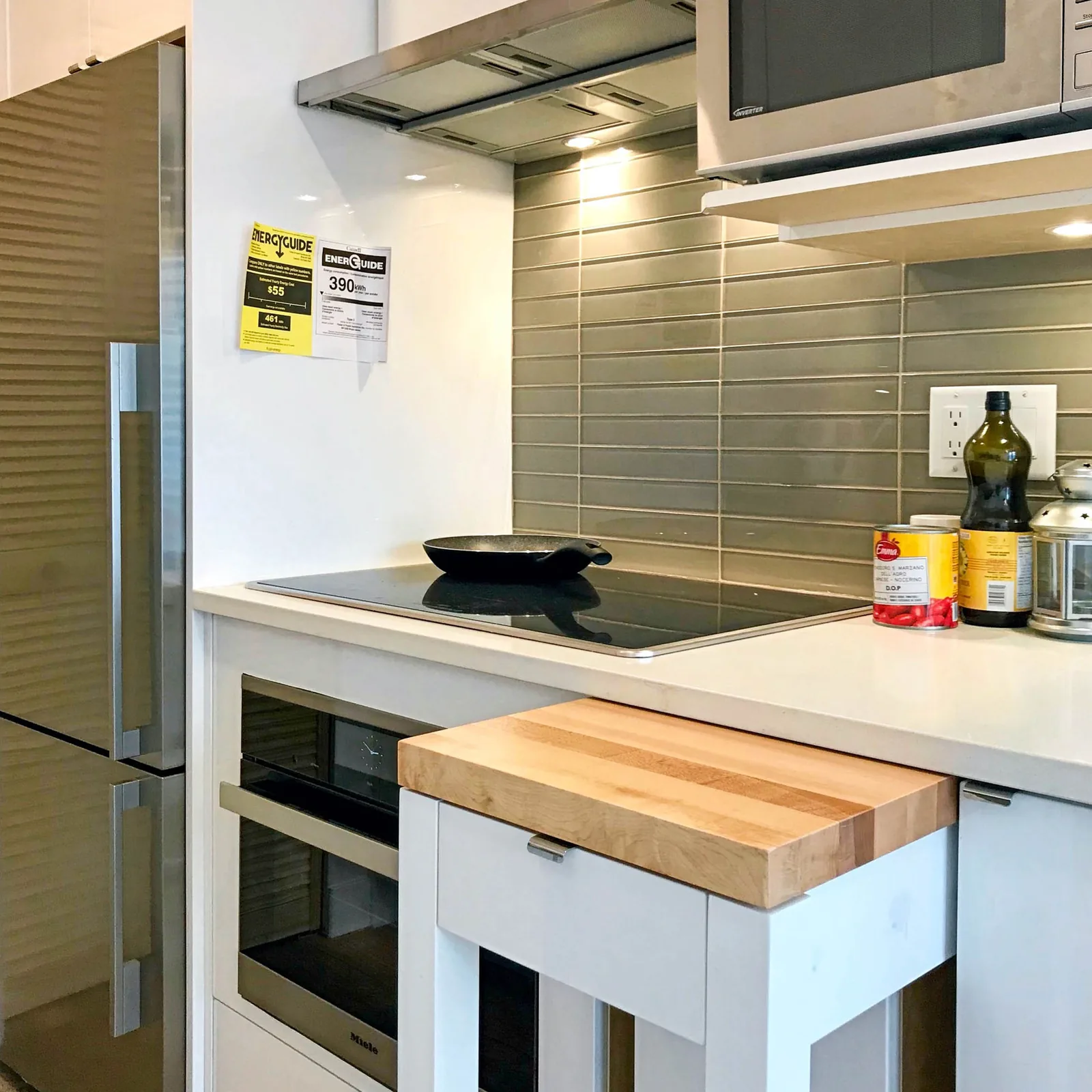
A gas range needs a dedicated gas line from the distribution system to a shut-off valve behind the range, and a flexible connector from the valve to the appliance. A gas range also needs combustion air (which the kitchen usually has), and a range hood that vents to the outside if the range is high output.
In a renovation, if the kitchen previously had an electric range, a new gas line has to be run from the meter or an existing branch, a shut-off valve installed, and the connection made. The permit covers all of this.
A gas fireplace has three gas-related requirements: a gas line to the fireplace, a shut-off valve, and a vent. The vent is usually a direct vent that goes through the wall to the outside, and it must terminate in a location that meets the Code clearances from windows, doors and property lines.
A new fireplace installation is often part of a larger project, because it affects the framing, the wall finish, the mantel and the hearth. The gas permit covers the gas work. The City's building permit covers the structural and architectural work.
A gas BBQ outlet on a deck is a dedicated branch off the gas distribution system. It runs from the meter, through the wall, to a shut-off valve and a quick-connect fitting at the deck surface. The outlet must be in a location that meets the Code clearances from combustibles and from windows and doors. The permit covers the pipe and the outlet.
A gas water heater needs a gas line, a shut-off valve, a vent, combustion air, and a discharge pipe from the temperature and pressure relief valve. In a new home, the water heater is installed in a utility room with appropriate vent clearances. In a replacement, the venting is re-checked against the new unit's specifications, because a different unit may need a different vent size.
A gas furnace or boiler is the largest gas appliance in a typical home. It needs a gas line sized for the full load, a shut-off valve, a vent, combustion air, and a condensate drain for a high-efficiency unit. The permit covers all of this. The building permit may also require a mechanical plan showing the heating distribution.
Many new Vancouver homes and multiplexes are built with a heat pump instead of a gas furnace, because of the City's energy and emissions targets. Some homes are built with no gas service at all. Others keep gas for the range, the fireplace or the BBQ outlet, while the primary heat comes from the heat pump.
If a project has any gas at all, the gas permit process still applies. A single gas appliance needs a permit the same way a full gas distribution does. We cover heat pumps in detail in a separate post.
- Hire a licensed gas contractor. Confirm the licence with Technical Safety BC before the work begins. Ask for the licence number and verify it.
- Confirm the permit is pulled. Ask the contractor for a copy of the permit application and the permit number. Keep these with the project documentation.
- Do not turn on the gas until the permit is signed off. The contractor should not commission any appliance until Technical Safety BC has signed off the permit.
- Keep the inspection record. When the permit is signed off, ask for the inspection record. This is proof that the installation meets the Code. Insurance companies may ask for this if there is ever a claim.
- Do not do your own gas work. This is not a situation where a homeowner can save money by doing it themselves. The Act does not allow it, and the consequences of an error can be severe.
We bring in a licensed gas contractor as a sub-contractor on every project that has gas work. We coordinate the gas permit with the City's building permit, so the two inspections happen in the right order. For a new build, the gas rough-in is coordinated with the framing, so the gas lines are installed before the walls are closed up.
We keep the gas permit and the inspection record in the project file and give copies to the homeowner at handover.
Tell us about your project today. Book a one-hour project consultation.
Related on this site: Kitchen renovation permits in Metro Vancouver · Heat pumps for a Vancouver home · BC Hydro electrical service for a Vancouver multiplex